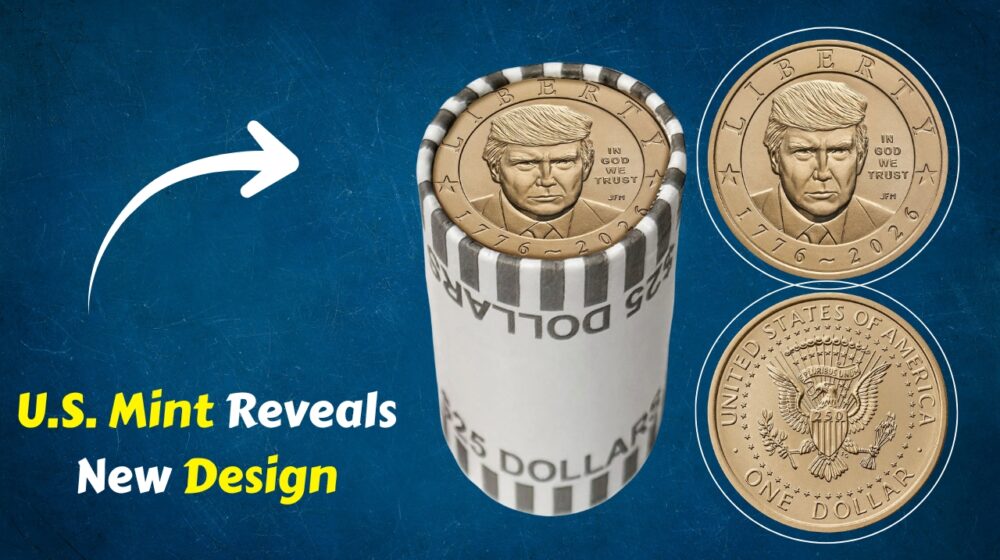
The United States Mint has pulled back the curtain on its 2026-W Proof President Donald J. Trump Gold Coin, a one-ounce, 24-karat $250 collector issue set to go on sale November 5. Struck at the West Point Mint and carrying a “W” mint mark, the coin bears the dual date 1776 ~ 2026 and places the number “250” on the shield of the Presidential Seal reverse, marking the 250th anniversary of American independence.
The gold proof arrives on the heels of the Mint’s Semiquincentennial President Donald J. Trump $1 Coin, a circulating-format issue struck in golden-colored manganese-brass that entered the market in rolls and bags on September 2. Demand for that product was intense: the Mint’s initial allotment of 50,000 bags and 150,000 rolls sold down to roughly 99% of the available supply, with bags gone in under an hour and rolls sold out in under eight.
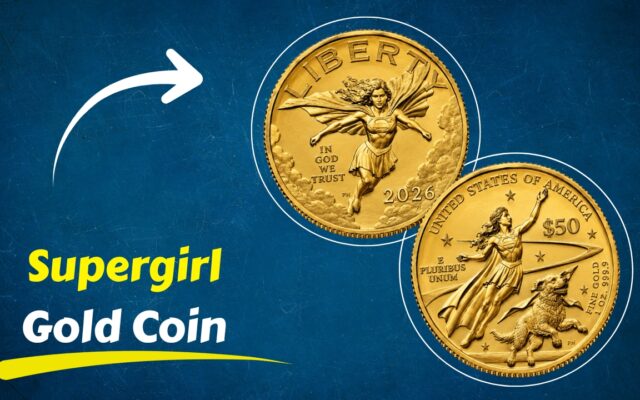
This new $250 gold coin will be the Mint’s second $250-denominated numismatic product of 2026, following the 1776 ~ 2026 $250 Freedom Ringing Liberty Bell Gold Coin a separate one-ounce issue capped at 2,026 pieces and priced at $19,600. Where that coin paired an eagle-and-bell reverse concept with an allegorical obverse, the Trump gold proof instead carries a presidential portrait, placing it in the long but rare tradition of American coinage depicting a sitting head of state.
Coin Specifications
| Attribute | Detail |
|---|---|
| Program | U.S. Semiquincentennial (250th Anniversary of American Independence) |
| Product | 2026-W Proof President Donald J. Trump Gold Coin |
| Denomination | $250 |
| Dual Date | 1776 ~ 2026 |
| Mint Facility | West Point |
| Mint Mark | W |
| Finish | Proof |
| Composition | 24-karat, .9999 fine gold |
| Weight | 1 troy ounce |
| Household Order Limit | 1 coin |
| Official Mintage / Product Limit | Not yet announced by the Mint |
| Official Price | Not yet announced by the Mint |
| Estimated Price (current gold pricing grid) | Approximately $5,440, based on the Mint’s $4,400.00–$4,449.99 average gold price tier |
| Comparable Mint Products | 2026-W $50 Proof American Gold Eagle (1 oz.), priced at $5,300; 2026-W $50 Proof American Gold Buffalo (1 oz.), priced at $5,340 |
| Release Date | November 5, 2026 |
| Sales Channel | United States Mint online catalog (exclusive) |
Because the U.S. Mint reprices numismatic gold products weekly based on the LBMA gold-price average, the estimated price above is illustrative only and will be superseded by the Mint’s official price at the time of release.
Ordering and Buying Process
As of this writing, the Mint has confirmed some purchasing parameters for the 2026-W $250 Trump Gold Coin while leaving others open:

- Household order limit: The Mint has set a limit of one coin per household a standard control the agency uses on high-demand numismatic gold releases to slow bulk buying and reselling in the immediate aftermath of launch.
- Release date: Sales are scheduled to open November 5, 2026, exclusively through the U.S. Mint’s online catalog at usmint.gov.
- Mintage and product limit: Not yet disclosed. The Mint typically announces a fixed mintage or “product limit” for proof gold coins shortly before or at the moment of release; collectors should expect that figure to be published closer to the November 5 launch.
- Price: Not yet fixed. Numismatic gold coins are priced off the Mint’s weekly gold pricing grid, which adjusts according to the London Bullion Market Association (LBMA) gold price average. Based on the pricing tier in effect at the time the coin’s specifications were revealed, a same-day release would have priced the coin at roughly $5,440 but the actual launch price will depend on where gold is trading in early November.
- Likely demand pattern: Given how quickly the companion $1 coin sold out 99%+ of both the bag and roll allocations within hours collectors interested in the $250 gold proof should expect a fast sellout once ordering opens, particularly if the Mint sets a modest product limit as it did with the $19,600 Liberty Bell gold coin’s 2,026-piece cap.
Prospective buyers should watch the Mint’s official product page and press announcements in the weeks before November 5 for the confirmed price, mintage cap, and exact ordering time, since all three had not been finalized as of the coin’s design unveiling.
Historical Background
The Semiquincentennial Program
2026 marks 250 years since the signing of the Declaration of Independence, and the U.S. Mint has built an extensive commemorative program around the anniversary including one-year design changes to circulating denominations such as the dime, quarter, half dollar, and dollar, alongside a slate of special numismatic coins and medals. The $250 Trump Gold Coin and the $250 Freedom Ringing Liberty Bell Gold Coin are both part of that broader Semiquincentennial numismatic lineup, sharing the $250 face value and one-ounce gold format but differing sharply in subject matter one built around a national symbol, the other around a sitting president’s portrait.
A Sitting President on U.S. Coinage
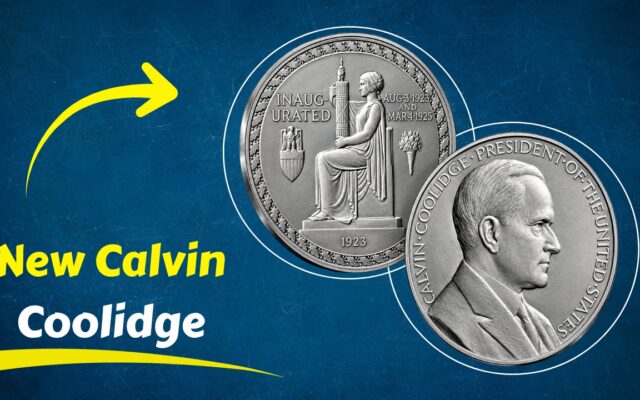
Featuring a living, serving president on an American coin is exceptionally rare. Federal law has long prohibited a living president’s portrait from appearing on circulating currency, and the only prior instance of a sitting president appearing on any U.S. coin was Calvin Coolidge, who shared a 1926 commemorative half dollar with George Washington to mark the 150th anniversary of independence. The Trump gold coin’s path to production ran through the Commission of Fine Arts (CFA), the federal body that reviews coin and medal designs; because the piece is a commemorative numismatic issue rather than a circulating coin, the Treasury Secretary held authority to approve its production despite the restriction that applies to circulating currency.
From Design Review to Final Coin
The design now heading to production differs from what the CFA initially discussed. At a March 2026 review, the commission recommended an obverse portrait showing President Trump leaning forward with his hands resting on a desk, paired with a reverse depicting an eagle alongside the Liberty Bell, possibly perched on or carrying the bell’s wooden yoke. Mint officials also floated the idea of striking the coin on a larger-than-standard one-ounce planchet. The finished coin took a different path: rather than a bespoke Liberty Bell reverse, the Mint paired the same presidential portrait used on the Trump $1 coin with the traditional Presidential Seal reverse, and settled on a standard one-ounce gold planchet.
The Designer
U.S. Mint Chief Engraver Joseph Menna created the obverse portrait, basing it on an official White House photograph taken by photographer Daniel Torok. The reverse uses the Presidential Seal design originally created by former U.S. Mint Chief Engraver Frank Gasparro, a design element with a long history across U.S. coins and medals, here adapted with the added “250” inscription on the eagle’s shield to tie it specifically to the Semiquincentennial.
The Companion $1 Coin
The gold proof shares its core designs with the Semiquincentennial President Donald J. Trump $1 Coin, a circulating-format product struck in a golden-hued but gold-free manganese-brass alloy (88.5% copper, 6% zinc, 3.5% manganese, 2% nickel). That dollar coin launched in rolls and bags on September 2, 2026, following an earlier July 4, 2026 strike of 250,000 pieces bearing a special “July 4th” privy mark, which the Mint randomly distributed within the general rolls and bags rather than selling as a standalone product.
Obverse and Reverse Design Details
Obverse: Presidential Portrait
The obverse presents a portrait of President Donald J. Trump, sculpted by Chief Engraver Joseph Menna from an official White House photograph by Daniel Torok. The design is inscribed with LIBERTY, IN GOD WE TRUST, and the dual date 1776 ~ 2026, marking both the nation’s founding and its 250th anniversary year. The portrait and inscriptions match those used on the companion $1 coin; the gold proof does not carry the leaning-forward, hands-on-desk pose the CFA reviewed in March, nor the seven-stars/six-stars arrangement discussed at that stage those elements belonged to an earlier design concept that was not carried into the final coin.
Reverse: Presidential Seal
The reverse reproduces the Presidential Seal, originally designed by former Chief Engraver Frank Gasparro: an eagle grasping an olive branch and a bundle of arrows, a shield across its breast, and a banner reading E PLURIBUS UNUM held in its beak. For this issue, the shield carries an additional inscription, “250,” marking the Semiquincentennial. Surrounding inscriptions identify the coin’s origin and content: UNITED STATES OF AMERICA, 250 DOLLARS, and 1 OZ. .9999 FINE GOLD. Aside from the denomination, weight, and fineness text details specific to a $250 gold coin rather than a $1 circulating piece the reverse composition mirrors the Presidential Seal used on the Trump dollar coin.
Why This Matters for Collectors
It is a genuinely rare category of U.S. coin. Coins bearing the image of a sitting president are almost nonexistent in American numismatic history, with the 1926 Coolidge commemorative half dollar standing as the only clear prior example. A one-ounce, .9999 fine gold proof in that category gives collectors a modern parallel to a coin type most have only read about.
Demand signals are already strong. The companion $1 coin’s near-instant sellout 99%-plus of both bag and roll allocations gone within hours suggests the Mint may see comparably fast demand for the gold version once ordering opens, particularly given gold’s higher per-unit desirability among collectors and investors alike.
It sits at the center of the Semiquincentennial gold-coin field. With the $19,600 Liberty Bell gold coin capped at 2,026 pieces already established as a benchmark, collectors building a complete 2026 $250 gold set will want to track how this second $250 issue compares in mintage, pricing, and eventual secondary-market premiums.
Design history adds a layer of intrigue. The coin’s final design a standard portrait-and-seal pairing on a standard one-ounce planchet represents a step back from the more elaborate desk-pose obverse and eagle-and-Liberty-Bell reverse the CFA reviewed in March. Collectors and researchers interested in U.S. Mint design development will find the contrast between the reviewed concept and the finished product a notable case study.
Unknowns still matter for planning a purchase. With price and mintage unconfirmed as of the design reveal, collectors should treat this as an evolving story the eventual mintage limit, in particular, will heavily influence both allocation odds on release day and the coin’s premium on the secondary market afterward.
Quick-Reference Buying Guide
- Mark the release date. Sales are scheduled to open November 5, 2026, through the U.S. Mint’s official online catalog only.
- Set up and verify your Mint account in advance. Since gold-coin launches sell out quickly, have a U.S. Mint online account, current shipping information, and payment method ready before the on-sale time.
- Watch for the official mintage and price announcement. Both remain unconfirmed; check the Mint’s product page and press releases in the days before launch for the finalized figures.
- Remember the household limit. Only one coin per household will be permitted at launch additional orders are likely to be canceled under the Mint’s standard household-limit enforcement.
- Expect a fast sellout. Based on the companion $1 coin’s launch performance, be ready to order at the opening of sales rather than waiting, especially if the eventual mintage limit is modest.
- Compare pricing context before ordering. Check the current gold pricing tier against comparable Mint gold proofs (such as the Gold Eagle and Gold Buffalo) to understand roughly where the final price is likely to land.
- Have a secondary-market plan if you miss the launch. If the on-sale allocation sells out, monitor major dealers and auction platforms for post-release listings, keeping in mind that early secondary-market premiums on sold-out Mint gold products can run well above issue price.