A coin is small enough to slip into a pocket, yet it can carry the weight of an entire era. Long before museums and textbooks distilled the American story into dates and names, the U.S. Mint was already doing it one strike at a time pressing independence, war, mourning, expansion, and reinvention into copper, silver, and gold. For collectors, that’s the real appeal of numismatics: these aren’t just investment vehicles or shiny curiosities, they’re primary-source artifacts you can hold.
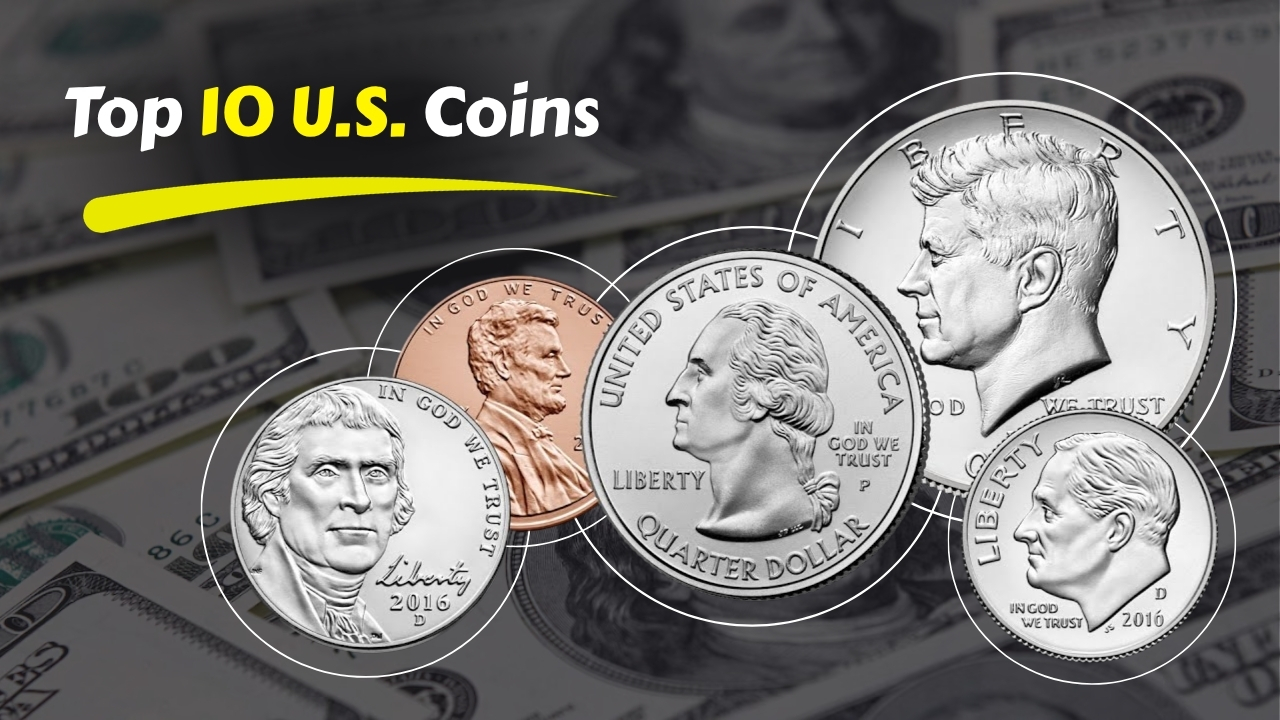
This guide counts down ten coins from the Continental Congress’s first tentative cent in 1787 to the record-breaking 50 State Quarters Program that closed out the 20th century that each capture a distinct chapter of the American experience. Unlike a single modern commemorative release, this is a collection roadmap spanning more than two centuries of U.S. coinage, so rather than one uniform “how to order” window, we’ve built a practical guide to acquiring examples of each coin on the secondary and auction markets, along with the historical background, design details, and collecting considerations for every entry.
Specifications At a Glance
| Rank | Coin | Years Issued | Composition | Weight | Diameter | Approx. Mintage | Designer |
|---|---|---|---|---|---|---|---|
| 10 | Fugio Cent | 1787 | Copper | ~10.2 g (157 grains) | ~29 mm | ~300,000–400,000 | Attributed to Benjamin Franklin / James Jarvis |
| 9 | Flowing Hair Dollar | 1794–1795 | 89.24% silver, 10.76% copper | 26.96 g | ~39–40 mm | 1,758 (1794 date only) | Robert Scot |
| 8 | Draped Bust Dollar (1804) | Struck 1834–1835 (dated 1804) | ~89.2% silver | 26.96 g | ~40 mm | 15 known survivors | Robert Scot (design); later Mint engravers |
| 7 | Gold Dollar (Type II/III) & $3 Gold Piece | 1854–1889 | 90% gold, 10% copper | 1.672 g (Type II/III dollar); 5.015 g ($3) | ~14.3–15 mm (dollar); ~20.5 mm ($3) | Varies by year and denomination | James B. Longacre |
| 6 | Walking Liberty Half Dollar | 1916–1947 | 90% silver, 10% copper | 12.5 g | 30.6 mm | Varies by year; hundreds of millions cumulative | Adolph A. Weinman |
| 5 | Saint-Gaudens Double Eagle | 1907–1933 | 90% gold, 10% copper | 33.44 g | 34 mm | Varies by year | Augustus Saint-Gaudens |
| 4 | Peace Dollar | 1921–1935 | 90% silver, 10% copper | 26.73 g | 38.1 mm | 1,006,473 (1921, high relief) | Anthony de Francisci |
| 3 | Steel Cent | 1943 only | Zinc-coated steel | 2.7 g | 19.05 mm | ~1.09 billion (all mints) | Victor D. Brenner (original 1909 design) |
| 2 | Kennedy Half Dollar | 1964–present | 90% silver (1964 only); later clad | 12.5 g (1964) | 30.6 mm | ~429 million (1964, all mints) | Gilroy Roberts (obverse) / Frank Gasparro (reverse) |
| 1 | 50 State Quarters | 1999–2008 | Copper-nickel clad | 5.67 g | 24.3 mm | 34+ billion (program total) | Various Mint sculptor-engravers |
Note: figures for pre-20th-century issues, especially mintage and survival counts, vary slightly between reference sources; the numbers above reflect commonly cited estimates from standard numismatic references such as the “Red Book” (A Guide Book of United States Coins) and PCGS/NGC population data.
How to Actually Buy These Coins: A Practical Guide
Unlike a brand-new Mint product with a fixed release date, per-household order limit, and a countdown clock on usmint.gov, the coins on this list range from still-affordable circulated pieces to some of the rarest objects in American history. There is no single “order window” instead, here’s how acquisition realistically works for each tier:
Common, affordable issues (Fugio Cent in worn grades, 1943 Steel Cent, later-date Walking Liberty halves, circulated Kennedy halves, State Quarters):
- Available year-round through local coin shops, major online dealers (APMEX, JM Bullion, Heritage Auctions’ fixed-price listings), and even pocket change for the more modern issues.
- No purchase limits; budget from under $1 to a few hundred dollars depending on grade.
- Always verify authenticity, especially with the 1943 cent, since counterfeit “rare” copper versions circulate.
Mid-tier, historically significant issues (1794 Flowing Hair Dollar in lower grades, early gold dollars and $3 gold pieces, 1907 Saint-Gaudens Double Eagles, 1921 Peace Dollars):
- Best sourced through reputable auction houses (Heritage Auctions, Stack’s Bowers, Great Collections) or established dealers who are members of the Professional Numismatists Guild (PNG).
- Prices range from several hundred to tens of thousands of dollars depending on grade, strike quality, and provenance.
- Buy only coins already certified by PCGS or NGC, or have an uncertified coin authenticated before purchase.
Elite rarities (1804 Draped Bust Dollar, exceptional Saint-Gaudens high-relief specimens, key-date gold coins):
- These trade almost exclusively through major numismatic auctions, with only a handful of transactions per decade for the rarest pieces.
- Expect six- to eight-figure prices and extensive provenance research; serious buyers typically work with a numismatic advisor.
- Watch major auction house calendars (Heritage, Stack’s Bowers, Sotheby’s numismatic sales) for upcoming offerings.
General buying tips for all tiers:
- Buy certified coins from PCGS or NGC whenever the budget allows third-party grading protects against counterfeits and overgrading.
- Compare “sight-seen” auction results (searchable in the PCGS and NGC price guides) before making an offer.
- Join a specialty club the Early American Coppers club, the Liberty Seated Collectors Club, or the American Numismatic Association for access to census data and trusted dealer networks.
- Set a per-coin budget before you start bidding; key dates and rarities routinely exceed pre-sale estimates at auction.
The Coins, One by One
10. 1787 Fugio Cent — The Nation’s First Coin
Historical background: Authorized by the Continental Congress in 1787, the Fugio Cent is generally recognized as the first coin struck under the sanction of the United States government, predating the U.S. Mint itself (established in 1792). Design input is traditionally credited to Benjamin Franklin, though contractor James Jarvis oversaw the actual striking. Production was troubled by shortages of copper and contractual disputes, and the coin circulated only briefly before fading from daily use.
Obverse: A sundial dominates the center, with the sun above casting a shadow onto the dial. The Latin word “FUGIO” (“I fly,” a reference to time’s passage) appears alongside the phrase “MIND YOUR BUSINESS” a Franklin-esque piece of civic and financial advice.
Reverse: Thirteen interlocking rings, each inscribed with the name of one of the original states, encircle the phrase “WE ARE ONE,” a direct visual statement of unity among the fledgling states.
Why it matters: The Fugio Cent represents America’s first attempt at a unified national currency, born directly out of the chaos of competing state and foreign coinage that plagued commerce after the Revolutionary War.
9. 1794 Flowing Hair Dollar — America’s First Silver Dollar
Historical background: Struck under authority of the Coinage Act of 1792, the Flowing Hair Dollar was the first silver dollar issued by the newly formed United States Mint. Only 1,758 pieces bear the 1794 date, and early production was hampered by primitive equipment, leading to weak strikes and adjustment marks (file marks used to correct overweight planchets) on most survivors.
Obverse: A youthful Liberty faces right, her hair cascading loosely behind her the “flowing hair” that gives the type its name surrounded by thirteen stars representing the original states, with “LIBERTY” arched above and the date below.
Reverse: A small, spread-winged eagle stands perched on a rock, encircled by a wreath, with “UNITED STATES OF AMERICA” wrapped around the border.
Why it matters: This coin announced that the United States intended to be taken seriously as a trading nation with credible, standardized coinage a direct assertion of economic sovereignty just a few years after independence.
8. 1804 Draped Bust Dollar — The “King of American Coins”
Historical background: In one of numismatics’ great ironies, no silver dollars were actually struck bearing the date 1804 during 1804 itself Mint records show dollar coinage had already lapsed by then. The coins known today were struck decades later, in the 1830s, primarily as diplomatic gifts for foreign dignitaries and for inclusion in official Mint proof sets. Only 15 examples are known across three recognized “classes,” making it one of the most storied rarities in the hobby.
Obverse: Liberty appears in profile with a draped bust and flowing hair pulled back, encircled by stars and the word “LIBERTY,” with the date beneath.
Reverse: A heraldic eagle with wings spread grips an olive branch and arrows, based on the Great Seal of the United States, with “UNITED STATES OF AMERICA” around the rim.
Why it matters: Beyond its rarity, the 1804 dollar tells a story about how the young republic used coinage as a tool of diplomacy and prestige, presenting polished, high-quality strikes to visiting foreign delegations.
7. 1854–1855 Gold Dollars and $3 Gold Pieces — Products of the Gold Rush
Historical background: The 1848 discovery of gold in California flooded the U.S. economy with bullion, making the original, tiny gold dollar (introduced in 1849) increasingly impractical. In 1854, the Mint enlarged the diameter and thinned the dollar (the “Type II” design) and simultaneously introduced an unusual new denomination, the $3 gold piece, intended in part to make buying sheets of three-cent stamps more convenient. Both denominations were designed by Chief Engraver James B. Longacre.
Obverse (Gold Dollar, Type II/III): A small Native American princess head wearing a feathered headdress, encircled by the word “LIBERTY” on a headband one of the first U.S. coin designs to draw on Native American imagery.
Reverse (Gold Dollar): A wreath of wheat, corn, cotton, and tobacco the four staple crops of the era surrounding the denomination.
Obverse ($3 Gold Piece): The same Native American princess motif, adapted to the larger canvas.
Reverse ($3 Gold Piece): A wreath of tobacco, wheat, corn, and cotton leaves encircling “3 DOLLARS.”
Why it matters: These coins are a direct monetary echo of the California Gold Rush, reflecting how a single geological discovery reshaped the nation’s money supply and pushed westward expansion into overdrive.
6. 1916–1947 Walking Liberty Half Dollar — American Artistry in Motion
Historical background: Sculptor Adolph A. Weinman won the commission for the new half dollar design in 1916, part of a broader early-20th-century push (championed earlier by Theodore Roosevelt) to elevate American coinage to fine-art standards. The design ran for over three decades, spanning World War I, the Roaring Twenties, the Great Depression, and World War II, before being replaced by the Franklin Half Dollar in 1948.
Obverse: Liberty strides confidently toward a rising sun, draped in an American flag that billows behind her, carrying branches of laurel and oak in her left arm a visual metaphor for a nation moving forward through change.
Reverse: A powerful eagle stands perched on a rocky outcrop sprouting a mountain pine sapling, wings partially spread as if about to take flight, with “IN GOD WE TRUST” alongside.
Why it matters: Widely considered one of the most beautiful coins the Mint ever produced, its imagery directly inspired the modern American Silver Eagle bullion coin, first struck in 1986 and still in production today giving Weinman’s design an active legacy more than a century after its debut.
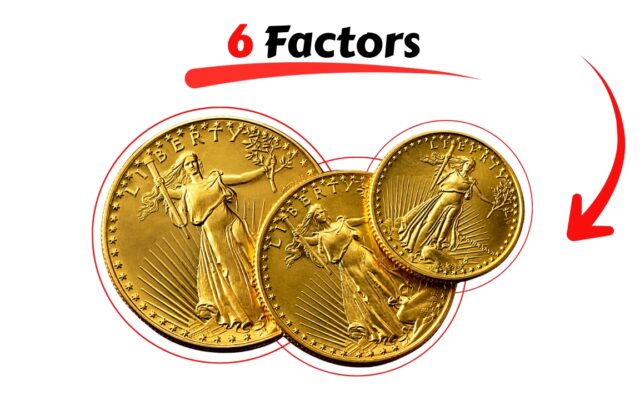
5. 1907 Saint-Gaudens Double Eagle – Roosevelt’s Coinage Renaissance
Historical background: President Theodore Roosevelt personally recruited renowned sculptor Augustus Saint-Gaudens to redesign U.S. gold coinage, aiming to match the artistic standard of ancient Greek coins. The original 1907 high-relief version was so sculpturally ambitious that Mint presses struggled to strike it properly, requiring multiple blows per coin impractical for mass production so a shallower relief version replaced it later that same year.
Obverse: A full-length, striding Liberty holds a torch aloft in her right hand and an olive branch in her left, the U.S. Capitol building visible in the background, with rays of sunlight framing the scene and 46 stars (for the states admitted by 1907) bordering the rim.
Reverse: A powerful eagle soars in flight above a rising sun, its wings fully extended across the coin’s field.
Why it matters: Considered by many numismatists to be the single greatest work of art in American coinage, the Saint-Gaudens Double Eagle exemplifies a moment when the federal government treated everyday currency as a canvas for national artistic ambition.
4. 1921 Peace Dollar – A Coin Born From a Grassroots Movement
Historical background: Following the devastation of World War I, a public campaign driven in part by the American Numismatic Association called for a coin commemorating peace. Sculptor Anthony de Francisci won the resulting design competition, and the Mint rushed a high-relief version into production in late 1921 before switching to a more strikeable low-relief version in 1922. The series continued intermittently through 1935.
Obverse: Liberty’s profile wears a radiant crown evocative of the Statue of Liberty, her expression conveying a hopeful, forward-looking optimism; “LIBERTY” arches above and the date sits below.
Reverse: An eagle perched on a rocky crag clutches an olive branch, gazing toward a rising sun, with the word “PEACE” inscribed prominently beneath — the first (and to date only) time that word has appeared on a circulating U.S. coin.
Why it matters: Few coins so directly memorialize a specific public sentiment the Peace Dollar exists because ordinary Americans lobbied for a coin that would mark the end of a catastrophic war and express hope for what came next.
3. 1943 Steel Cent -The Coin That Went to War
Historical background: With copper designated a critical wartime material for shell casings and military equipment, the Mint substituted zinc-coated steel for the cent’s traditional bronze alloy for a single year. Philadelphia struck roughly 684.6 million, Denver about 217.7 million, and San Francisco around 191.6 million, for a combined total of over 1.09 billion coins one of the highest single-year mintages of any U.S. coin denomination. The coins proved unpopular: they rusted, were often mistaken for dimes, and jammed vending machines, prompting a return to (recycled shell-casing) bronze in 1944.
Obverse: Abraham Lincoln’s familiar profile, originally designed by Victor D. Brenner in 1909, unchanged in composition from earlier cents apart from the new steel planchet.
Reverse: Two stylized wheat ears frame the denomination and “UNITED STATES OF AMERICA” the classic “Wheat cent” reverse used from 1909 to 1958.
Why it matters: This is a coin that brought the realities of wartime resource rationing directly into ordinary Americans’ pockets a small, tangible reminder that the home front was mobilized right alongside soldiers overseas. Genuine 1943 bronze off-metal errors, struck accidentally on leftover 1942 planchets, are today among the most valuable error coins in existence.
2. 1964 Kennedy Half Dollar – A Coin of National Mourning
Historical background: Following President John F. Kennedy’s assassination in November 1963, Congress and the Mint moved with unusual speed to replace the Franklin Half Dollar with a new design honoring him, using an existing portrait Gilroy Roberts had sculpted for Kennedy’s inaugural medal. Public demand was so overwhelming upon release in 1964 that many Americans hoarded the coins rather than spending them, and combined mintage across Philadelphia and Denver approached 429 million pieces that year alone the last year the half dollar was struck in 90% silver before the Mint reduced silver content and, later, eliminated it entirely.
Obverse: A left-facing portrait of Kennedy, sculpted by Chief Engraver Gilroy Roberts, with “LIBERTY” above and the date below.
Reverse: Frank Gasparro’s rendering of the Presidential Seal a heraldic eagle with a shield, arrows, and olive branch surrounded by fifty stars representing the states.
Why it matters: Few coins double as instant memorials. The Kennedy half dollar was, for millions of Americans, a physical keepsake of national grief and a tangible connection to a president whose loss defined a generation’s memory.
1. 50 State Quarters Program (1999–2008) – Coinage as Civic Education
Historical background: Congress authorized the program to release five new reverse designs per year, one for each state, in the order each joined the Union, running from Delaware in 1999 through Hawaii in 2008. States nominated themes often chosen through public contests or gubernatorial commissions highlighting local landmarks, wildlife, and history. The program was a runaway success: cumulative production across all fifty designs topped 34 billion coins, and it is widely credited with drawing millions of casual collectors, including children, into the hobby for the first time.
Obverse: George Washington’s familiar profile (based on John Flanagan’s 1932 design), adjusted slightly to accommodate the word “QUARTER DOLLAR” moving to the reverse.
Reverse: A unique design for each state ranging from Delaware’s Caesar Rodney on horseback to California’s John Muir gazing at Half Dome selected through a collaborative process between state officials, the U.S. Mint, and the Citizens Commemorative Coin Advisory Committee (later the Citizens Coinage Advisory Committee).
Why it matters: The State Quarters program proved that circulating coinage could still function as genuine public education and shared civic experience in the modern era, turning pocket change into a fifty-part portrait of the entire country and paving the way for follow-on series like the America the Beautiful Quarters.
Why This Matters for Collectors
These ten coins aren’t simply a “best of” list by market value together they sketch a continuous timeline of the American experiment:
- Independence and identity (Fugio Cent, Flowing Hair Dollar) show a new nation asserting economic sovereignty.
- Diplomacy and prestige (1804 Dollar) reveal how coinage doubled as statecraft.
- Expansion and industry (Gold Dollars, $3 Gold Piece) trace the westward push triggered by the Gold Rush.
- Artistic ambition (Walking Liberty Half, Saint-Gaudens Double Eagle) capture a Progressive-era belief that even everyday objects should aspire to fine art.
- War and sacrifice (Steel Cent) and peace and healing (Peace Dollar) bookend the two World Wars.
- Collective memory (Kennedy Half Dollar) shows a coin functioning as a spontaneous national memorial.
- Modern civic participation (State Quarters) demonstrates that circulating coinage can still engage the public at a massive scale.
For collectors, owning even one coin from each category builds a genuinely representative cross-section of U.S. history not just a set of dates, but a narrative you can arrange chronologically on a tray and literally watch the country change.
Quick-Reference Buying Guide
- Start with your budget tier. Decide whether you’re building an affordable “story set” (circulated Fugio, Steel Cent, State Quarters, common Kennedy halves) or chasing key dates and rarities.
- Prioritize certified coins. For anything beyond pocket-change denominations, buy PCGS- or NGC-graded examples, or have raw coins authenticated before purchase.
- Learn each coin’s danger zones. Know which issues attract counterfeits (1943 “copper” cents, 1804 dollars, gold dollars) and which grading quirks affect value (weak strikes on early silver dollars, corrosion on steel cents).
- Buy from PNG-member dealers or major auction houses. Heritage Auctions, Stack’s Bowers, and Great Collections regularly handle every coin on this list, from common to extraordinary.
- Check population reports before bidding. PCGS and NGC census data will tell you how many examples exist at a given grade, helping you judge whether an asking price is fair.
- Track auction results, not just asking prices. Realized prices (not dealer list prices) are the most reliable gauge of current market value, especially for rarities like the 1804 dollar.
- Join a specialty club or forum. Groups like the American Numismatic Association (ANA) or Early American Coppers give access to census data, mentorship, and trusted trading partners.
- Build chronologically, not just by budget. Collecting one representative piece from each era rather than only the cheapest or most available is what turns a coin collection into a genuine timeline of American history.
This article is intended for general numismatic education. Coin values, mintage figures, and population data change over time; always verify current pricing and certification status with PCGS, NGC, or a trusted dealer before making a purchase.