Beverly Hills has a striking new destination for collectors of rare coins, historic currency, and fine art. Lipton Coins, Fine Art & Antiques has opened its doors at 9478 W. Olympic Blvd., presenting a collection that spans early United States gold coinage, scarce large-denomination banknotes, a one-of-a-kind Indian Territory currency sheet, and a monumental gilded bronze sculpture by Augustus Saint-Gaudens carrying a $3 million insurance valuation.
What sets this gallery apart is the breadth of its holdings. Rather than focusing narrowly on coins, Lipton Coins, Fine Art & Antiques (LCFAA.com) blends numismatics with precious metals, fine art, antiques, and decorative arts under one roof. Its inaugural numismatic lineup includes some of the earliest gold denominations the U.S. Mint ever struck, a national bank note sheet with no known counterpart from its issuing town, and a Saint-Gaudens bronze with a direct artistic link to one of America’s most beloved coin designs the $20 Double Eagle.
For collectors, historians, and admirers of American decorative art alike, the gallery’s opening offers a rare chance to view and potentially acquire pieces that rarely appear together in one place.
Featured Pieces at a Glance
| Item | Grade / Condition | Key Detail |
|---|---|---|
| 1796 Capped Bust Right Quarter Eagle (No Stars on Obverse) | NGC MS60 | First-year issue; first $2.50 gold coin struck by the U.S. Mint |
| 1796/5 Capped Bust Right Half Eagle | NGC MS64 | Overdate variety of the $5 gold half eagle series |
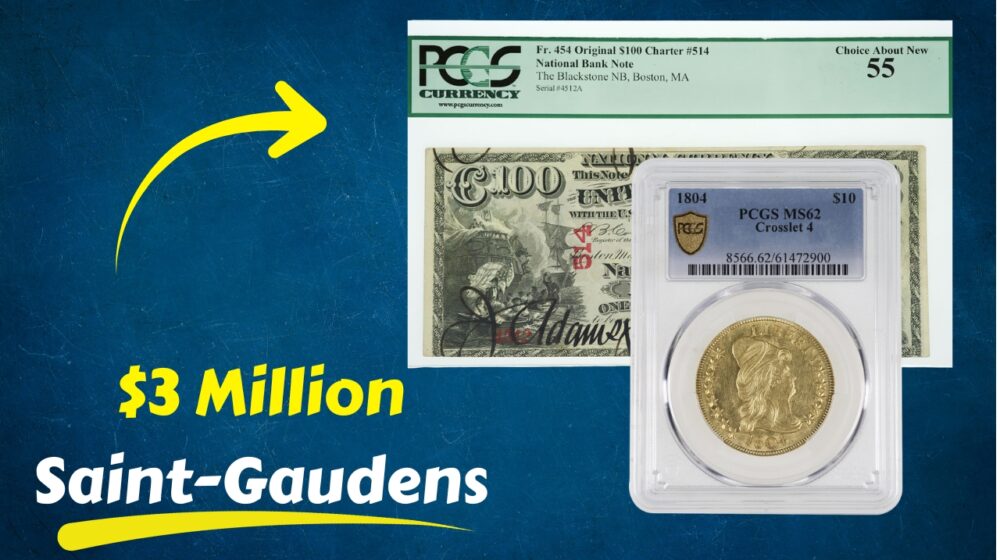
| 1804 Capped Bust Right Eagle (Crosslet 4) | PCGS MS62 | Among the most sought-after early American $10 gold issues |
| 1879 Flowing Hair $4 Stella | NGC PF65 Cameo | Experimental pattern gold coin from the 19th century |
| Holdenville, Indian Territory National Bank Note Sheet | Uncut sheet: three $10 notes + one $20 note | Only known surviving sheet from Holdenville; one of just two known uncut Indian Territory sheets overall |
| 1869 $100 Legal Tender Note (Friedberg 168) | PMG 25 | Large-denomination 19th-century U.S. currency |
| 1891 $50 Treasury Note (Friedberg 376) | PMG 45 | Pedigreed to the Dean Oakes Collection |
| $100 Original Series National Bank Note, Blackstone National Bank of Boston | PCGS 55 | Scarce large-size national currency |
| Series 1902 Red Seal $10 National Bank Note, First National Bank of Puerto Rico at San Juan (Friedberg 613) | PMG 20 | Territorial national currency issue |
| Series 1902 Plain Back $10, West Hollywood National Bank of Crescent Heights, CA (Friedberg 633) | PMG 63 | Only known surviving note from this bank |
| Saint-Gaudens “Victory” Gilded Bronze | N/A (sculpture) | Approx. 3½ feet tall; $3 million insurance valuation; one of three examples in private hands; conceived 1892, cast circa 1912 |
Note: Because these are gallery-held rarities rather than a Mint-issued release, there is no fixed retail price, mintage figure, or standard weight/diameter table applicable across the group each item’s specifications and price are determined individually through the gallery.
How Collectors Can View or Acquire These Pieces
Unlike a U.S. Mint product launch, these are gallery-held rarities being offered through private sale rather than a public subscription or fixed order window. There is no mintage allocation, purchase limit, or release date in the traditional sense. Instead, interested collectors should follow this general process:
- Visit or contact the gallery. Lipton Coins, Fine Art & Antiques is located at 9478 W. Olympic Blvd., Beverly Hills, California, and additional information is available at LCFAA.com.
- Gallery hours. The gallery is open Monday through Friday, 8 a.m. to 5 p.m., with evening and weekend appointments available for collectors whose schedules don’t align with standard business hours.
- Inquire about specific pieces. Because items such as the Holdenville sheet, the 1804 Crosslet 4 Eagle, or the Saint-Gaudens bronze are one-of-a-kind or extremely limited in number, collectors should contact the gallery directly to confirm current availability, condition details, and pricing before making travel plans or financial commitments.
- Request an appraisal or consultation. The gallery’s promotional materials reference appraisal services for rare antiques and currency, suggesting collectors with related items may also be able to have their own pieces evaluated during a visit.
- Expect individualized pricing. Given the caliber of material including a coin insured for $3 million prices for major pieces are typically negotiated privately rather than posted at a fixed retail rate, and serious inquiries should be prepared to discuss provenance, financing, and authentication with gallery staff.
Collectors interested in comparison shopping or exchange rate considerations for international buyers may also want to review current currency conversion resources before finalizing a purchase of this scale.
Historical Background: The Coins
1796 Capped Bust Right Quarter Eagle (No Stars on Obverse)
This coin holds a foundational place in American numismatics as the first $2.50 gold coin ever struck by the United States Mint. The quarter eagle denomination was authorized under the Coinage Act of 1792, but production did not begin until 1796. The earliest examples, including this “No Stars on Obverse” variety, were struck before the Mint added stars to the coin’s design later that same year, making early-date examples especially significant as first-year-of-issue rarities within the series.
1796/5 Capped Bust Right Half Eagle
The half eagle, valued at $5, was among the first gold denominations produced by the Mint alongside the quarter eagle and eagle. This particular example displays an overdate a 1796 date struck over an underlying 1795 die a characteristic that results from the Mint’s practice of reusing dies during the era’s earliest coinage years. Overdates like this one are prized by specialists as tangible evidence of the Mint’s early production methods and die-cutting practices.
1804 Capped Bust Right Eagle, Crosslet 4
The eagle, worth $10, represented the largest gold denomination struck by the U.S. Mint in this era. The 1804 eagle is particularly notable within early American numismatics, and the Crosslet 4 variety referring to the style of the numeral 4 in the date is one of the more actively studied die varieties from this period. Coins from this early eagle series are exceptionally scarce in higher grades, as most examples saw significant circulation or were later melted during gold recall periods.
1879 Flowing Hair $4 Stella
The Stella is one of the most famous experimental, or pattern, coins in American history. Struck in extremely limited numbers, the $4 gold Stella was never adopted as a regular circulating denomination but instead served as a proposed coin intended to align U.S. gold coinage more closely with European monetary systems of the era. Its rarity and unusual denomination have made it one of the most recognizable and sought-after pattern issues among advanced collectors.
Historical Background: The Currency
The Holdenville, Indian Territory Sheet
Among the currency highlights, the uncut sheet of three $10 notes and one $20 note from a national bank in Holdenville, Indian Territory, stands out as a true numismatic rarity. According to the gallery, only two uncut National Bank Note sheets are known to survive from Indian Territory as a whole, and the Holdenville sheet is the only known example from that specific issuing location. Indian Territory notes carry added historical significance as artifacts from the period before Oklahoma achieved statehood in 1907, when banks operating in the region issued currency under a distinct territorial framework.
Large-Denomination Federal and National Currency
The gallery’s currency offerings also include an 1869 $100 Legal Tender Note (Friedberg 168) and an 1891 $50 Treasury Note (Friedberg 376), the latter pedigreed to the well-regarded Dean Oakes Collection. Rounding out the currency lineup are a $100 Original Series National Bank Note from the Blackstone National Bank of Boston, a Series 1902 Red Seal $10 National Bank Note from the First National Bank of Puerto Rico at San Juan, and a Series 1902 Plain Back $10 note from the West Hollywood National Bank of Crescent Heights, California the last of which is described as the only known surviving note issued by that institution.
Historical Background: The Saint-Gaudens “Victory” Bronze
From Sherman Monument to Beverly Hills Gallery
The centerpiece of the gallery’s fine art holdings is a gilded bronze reduction, roughly 3½ feet tall, of the Victory figure that Augustus Saint-Gaudens created for the General William Tecumseh Sherman Monument, which stands in Grand Army Plaza in New York City. Saint-Gaudens conceived the original Victory figure in 1892, and this particular reduction was cast around 1912, several years after the sculptor’s death in 1907.
The bronze was previously part of the Wolf Family Collection and was offered by Sotheby’s in April 2023 with a pre-sale estimate of $500,000 to $700,000. It now carries a $3 million insurance valuation at the Lipton gallery and is described as one of only three examples of this reduction currently held in private hands.
Following Saint-Gaudens’ death, his widow, Augusta Fisher Homer Saint-Gaudens, authorized a limited series of reductions of the Victory figure. According to the gallery, eight such reductions were produced in total, with five now residing in institutional collections, including The Metropolitan Museum of Art, the Carnegie Museum of Art, and Arlington National Cemetery.
The Numismatic Connection
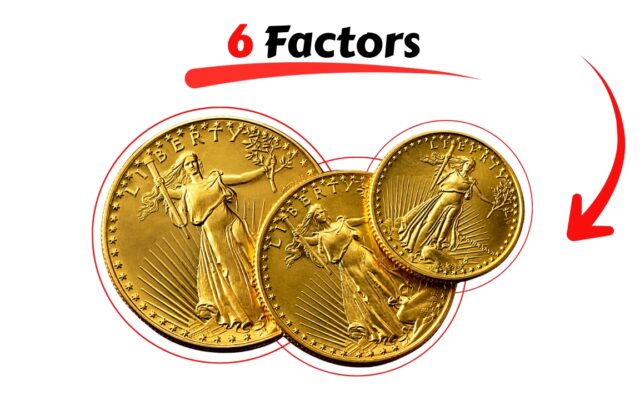
This sculpture is far more than a fine art curiosity for coin collectors it shares a direct artistic lineage with one of the most celebrated coin designs in American history. Augustus Saint-Gaudens designed the $20 Double Eagle gold coin introduced in 1907, widely regarded as one of the most beautiful coins the U.S. Mint ever produced. Harriette Eugenia Anderson, the model who posed for the Victory figure, is also associated with the Liberty figure that graces the Double Eagle’s obverse, tying this bronze sculpture and the famous gold coin to the same artistic vision and, in part, the same model.
Design Description: Obverse and Reverse
The Early Gold Coins (Capped Bust Right Series)
The 1796 quarter eagle, 1796/5 half eagle, and 1804 eagle all belong to the Capped Bust Right design family used across the Mint’s earliest gold denominations. The obverse of these coins features a right-facing bust of Liberty wearing a soft cap, with her hair flowing beneath it, surrounded by the word LIBERTY and the date. On the “No Stars” variety of the 1796 quarter eagle, the obverse notably lacks the stars that the Mint would add to later issues within the same year. The reverse of these early gold coins depicts a small eagle, often perched on a palm branch and clutching a wreath in its beak a design commonly referred to by collectors as the “Small Eagle” reverse, used before the Mint transitioned to the larger, more heraldic eagle design in subsequent years.
The 1879 $4 Stella
The Stella’s obverse features a left-facing portrait of Liberty with flowing hair, encircled by stars and inscriptions reflecting its experimental gold-weight denomination system. The reverse displays a large five-pointed star the design element from which the coin earns its “Stella” nickname along with lettering denoting its intended value and metal content under the proposed international gold standard the coin was designed to test.
The Saint-Gaudens Victory Bronze
While not a coin, the Victory sculpture shares stylistic DNA with Saint-Gaudens’ coin work. The figure depicts a winged Victory in classical, flowing drapery, striding forward in a manner reminiscent of the allegorical figures popular in American Beaux-Arts sculpture of the era. This dynamic, forward-stepping pose and idealized figural style closely parallel the Liberty figure Saint-Gaudens later placed on the $20 Double Eagle, reinforcing the sculptural continuity between his large-scale public monuments and his celebrated coin design.
Why This Matters for Collectors
- First-year and one-of-a-kind rarities in one location. From the first-ever $2.50 gold coin design to the only known National Bank Note sheet from Holdenville, this gallery brings together an unusually concentrated set of “only one known” or “first of its kind” pieces.
- Cross-collecting appeal. The presence of the Saint-Gaudens bronze alongside early U.S. gold coinage creates a rare opportunity for collectors who appreciate both fine art and numismatics to explore the shared artistic and historical threads connecting the two fields.
- Strong pedigrees add confidence. Items such as the 1891 Treasury Note’s connection to the Dean Oakes Collection, or the bronze’s prior placement in the Wolf Family Collection and a 2023 Sotheby’s sale, give serious buyers documented ownership histories that support authenticity and long-term value.
- A tangible link between American sculpture and coin design. The Victory bronze’s connection to the $20 Double Eagle through both Saint-Gaudens’ design work and model Harriette Eugenia Anderson offers collectors a unique way to own a piece of the story behind one of America’s most iconic coins.
- A new venue for high-end acquisitions. With the gallery combining numismatics, fine art, and antiques under one roof, collectors gain a single point of contact for evaluating, comparing, and potentially acquiring rarities across multiple collecting categories.
Quick-Reference Buying Guide
- Identify pieces of interest. Review the gallery’s current highlights including the 1796 quarter eagle, 1804 eagle, Stella, Holdenville sheet, and Victory bronze and note which align with your collecting focus.
- Contact the gallery directly. Reach out through LCFAA.com or by visiting in person to confirm current availability, as items of this rarity can move quickly or be subject to private negotiation.
- Plan your visit around gallery hours. The gallery is open Monday through Friday from 8 a.m. to 5 p.m.; request an evening or weekend appointment in advance if needed.
- Request documentation and provenance. For major pieces, ask for grading certification (NGC/PCGS/PMG) details and any available pedigree or prior sale history, such as the bronze’s Sotheby’s and Wolf Family Collection background.
- Discuss pricing and terms privately. Because these are individually negotiated sales rather than fixed-price Mint releases, be prepared to discuss valuation, financing, and payment terms directly with gallery staff.
- Consider an appraisal for related holdings. If you own comparable rare coins, currency, or antiques, ask about the gallery’s appraisal services during your visit.
- Verify authenticity through third-party grading. Confirm that any coin or note purchase includes its NGC, PCGS, or PMG holder and certification number for your own records and future resale considerations.
- Factor in insurance and secure transport. Given valuations reaching into the millions for pieces like the Victory bronze, arrange appropriate insurance and secure transport before taking possession of high-value acquisitions.