The U.S. Mint made 232.4 million circulating coins in August 2026, a steep drop from July’s 437.9 million. That is a 46.9% month-over-month decline. It still beats August 2025 by 20.4%, and it comes at a moment when the America 250 rollout is adding new designs and new collector products.
The month’s headline story is a shift in mix. Nickels and dimes led production, the recently released U.S. Constitution quarter accounted for most of the quarter output, and more President Donald J. Trump $1 coins were struck. Enduring Liberty half dollars kept coming, while Native American dollars paused. Nickels fell 52.5% from July, dimes fell 51.2%, and quarters fell 25.8%.
Behind the monthly swings is a bigger structural change: cents are no longer made for circulation, so the Mint’s old volume leader has vanished from the totals. Year to date, the Mint has produced 2.3002 billion coins, 41.5% fewer than in the same stretch of 2025.
This article covers the August production data, the design and history behind each 2026 coin, the buying process for Mint products, and what all of it means for collectors.
August 2026 Production at a Glance
| Detail | Figure |
|---|---|
| August 2026 total | 232.4 million coins (Denver 133.0M, Philadelphia 99.4M) |
| Change vs. July 2026 | Down 46.9% (July: 437.9 million) |
| Change vs. August 2025 | Up 20.4% (August 2025: 193.0 million) |
| Year-to-date (Jan–Aug 2026) | 2,300.2 million (Denver 1,251.5M, Philadelphia 1,048.7M) |
| Year-to-date, same period 2025 | 3,930.62 million (down 41.5% in 2026) |
| Full-year pace if trends hold | About 3.45 billion coins in 2026 |
| 2025 full-year total | Nearly 4.95 billion, the fifth straight annual decline and the lowest since 2009 |
| Cent production for circulation | Ended July 2025 (only 400,000 struck that month, none from August through December) |
August 2026 by Denomination and Mint
| Coin | Denver | Philadelphia | Total |
|---|---|---|---|
| Jefferson nickel | 31,700,000 | 23,500,000 | 55,200,000 |
| Emerging Liberty dime | 60,500,000 | 55,000,000 | 115,500,000 |
| Quarters | 36,000,000 | 10,600,000 | 46,600,000 |
| Enduring Liberty half dollar | 4,800,000 | 2,900,000 | 7,700,000 |
| Native American $1 | 0 | 0 | 0 |
| Trump $1 | 0 | 7,400,000 | 7,400,000 |
| Total | 133,000,000 | 99,400,000 | 232,400,000 |
Year-to-Date 2026 by Denomination (in millions)
| Mint | 5¢ | 10¢ | 25¢ | 50¢ | Native Am. $1 | Trump $1 | Total |
|---|---|---|---|---|---|---|---|
| Denver | 371.8 | 421.5 | 407.2 | 47.6 | 3.4 | 0 | 1,251.5 |
| Philadelphia | 316.3 | 382.5 | 294.2 | 35.4 | 3.9 | 16.4 | 1,048.7 |
| Total | 688.1 | 804.0 | 701.4 | 83.0 | 7.3 | 16.4 | 2,300.2 |
Thirteen Months of Circulating Production
| Month | Mintage | Rank (of 13) |
|---|---|---|
| August 2026 | 232.40 M | 8 |
| July 2026 | 437.90 M | 2 |
| June 2026 | 263.58 M | 6 |
| May 2026 | 202.76 M | 10 |
| April 2026 | 189.90 M | 12 |
| March 2026 | 228.42 M | 9 |
| February 2026 | 296.74 M | 4 |
| January 2026 | 448.50 M | 1 |
| December 2025 | 279.20 M | 5 |
| November 2025 | 130.28 M | 13 |
| October 2025 | 367.36 M | 3 |
| September 2025 | 239.82 M | 7 |
| August 2025 | 193.00 M | 11 |
The Mint makes circulating coins to fill orders from the Federal Reserve Banks, which then send them through their terminals to commercial banks. That is why monthly totals rise and fall with demand instead of following a steady schedule.

Coin Specifications
The 2026 one-year-only coins keep the standard sizes and metals of each denomination. The dual date 1776 ~ 2026 appears on the circulating nickel, dime, quarters, half dollar and dollar coins.
| Coin | 2026 Design | Composition | Weight | Diameter | Mints (2026) |
|---|---|---|---|---|---|
| Nickel | Traditional Jefferson design with dual date | 75% copper, 25% nickel | 5.000 g | 21.21 mm | Denver, Philadelphia |
| Dime | Emerging Liberty | Copper-nickel clad | 2.268 g | 17.91 mm | Denver, Philadelphia |
| Quarter | Five designs (see below) | Copper-nickel clad | 5.670 g | 24.26 mm | Denver, Philadelphia |
| Half dollar | Enduring Liberty | Copper-nickel clad | 11.34 g | 30.61 mm | Denver, Philadelphia |
| Native American $1 | 2026 Native American design | Manganese-brass clad | 8.10 g | 26.50 mm | Denver, Philadelphia |
| Trump $1 | President Donald J. Trump | Gold-colored base metal (exact specifications should be confirmed on the Mint’s product page) | See Mint page | See Mint page | Philadelphia only |
Weights, diameters and compositions for the nickel, dime, quarter and Native American dollar are standard published specifications. The half-dollar figures match the Kennedy half dollar’s standard.
2026 Quarter Mintages Through August
| Design | Circulation Debut | Denver | Philadelphia | Total |
|---|---|---|---|---|
| Mayflower Compact | Jan. 5 | 170,200,000 | 146,200,000 | 316,400,000 |
| Revolutionary War | Mar. 23 | 102,400,000 | 100,400,000 | 202,800,000 |
| Declaration of Independence | June 1 | 126,600,000 | 69,600,000 | 196,200,000 |
| U.S. Constitution | Aug. 10 | 56,400,000 | 7,000,000 | 63,400,000 |
| Gettysburg Address | Fall 2026 (no firm date) | 1,400,000 | 1,400,000 | 2,800,000 |
| Total | 457,000,000 | 324,600,000 | 781,600,000 |
Reconciliation note: The Mint’s denomination table shows 701.4 million quarters struck from January through August 2026. The design table’s 781.6 million includes 80.8 million 2026-dated quarters struck in December 2025. Take those out and the design totals come to 700.8 million, which is 600,000 short of the official figure. In August specifically, the design-level numbers add up to 46.0 million of the 46.6 million quarters reported.
2026 Half Dollar Production by Month (millions)
| Month | Denver | Philadelphia |
|---|---|---|
| January | 7.5 | 6.3 |
| February | 3.0 | 1.8 |
| March | 7.6 | 3.2 |
| April | 3.6 | 7.6 |
| May | 6.0 | 6.0 |
| June | 8.7 | 1.0 |
| July | 6.4 | 6.6 |
| August | 4.8 | 2.9 |
| Total | 47.6 | 35.4 |
That is 83 million half dollars through August, already more than double the 34 million made in all of 2025 (Denver 19.8 million, Philadelphia 14.2 million). The Mint has not said how many are earmarked for general circulation.
Native American Dollars and Trump Dollars
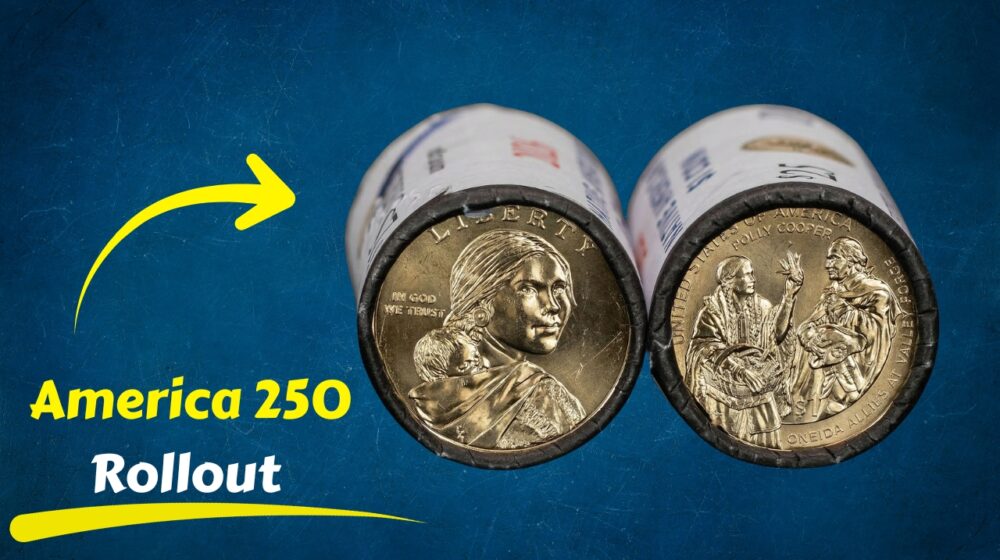
- Native American $1: 7.3 million made through August (Denver 3.4 million, Philadelphia 3.9 million), against 5.18 million for all of 2025. None were struck in May or August.
- Trump $1: 16.4 million struck, all at Philadelphia (9.0 million in July, 7.4 million in August). That is well above the roughly 8.75 million coins covered by collector roll and bag limits, which fits the Mint’s statement that the coins will also enter circulation.
How to Buy: Ordering, Limits and Timing
Route 1: Pocket change and bank rolls
All of the circulating designs are meant to reach the public through banks. Coins move from the Mint to the Federal Reserve, then to commercial banks. Finding a specific design can take time, since new coins mix in with billions of older ones. The Trump dollar has been announced for circulation too, but the Fed no longer routinely orders dollar coins for general use, so watch for updates.
Route 2: Mint rolls and bags
The Mint sells circulating-quality rolls and bags directly at usmint.gov. Here is where each product stands, based on the most recent reports.
| Product | On Sale | Details | Status |
|---|---|---|---|
| Mayflower Compact quarter rolls and bags | Feb. 5 | Denver and Philadelphia | Sold out within minutes (returned to sale later) |
| Revolutionary War quarter rolls and bags | Mar. 27 | Denver and Philadelphia | Sold out almost immediately |
| Emerging Liberty dime rolls and bags | Apr. 17 | Sold at a premium | Sold out within minutes |
| Enduring Liberty half dollar rolls and bags | May 26 | Two-roll set and 200-coin bag, equal numbers of P and D coins; product limits of 100,000 rolls and 50,000 bags | 12.35 million coins sold through Aug. 30; rolls at their limit; about 8,200 bags left at month’s end |
| Declaration of Independence quarter rolls and bags | June 16 | Denver and Philadelphia (separate from the privy-mark quarters shipped to banks) | Check Mint page |
| U.S. Constitution quarter rolls and bags | Aug. 26 | Denver and Philadelphia | Check Mint page |
| Native American $1 (P or D option) | Jan. 27 | 1,086,300 sold through Aug. 30 | Both options unavailable |
| Trump $1 rolls and bags | Sept. 2 | 25-coin roll $61; 100-coin bag $154.50; limits of 150,000 rolls and 50,000 bags (up to 8.75 million coins); 250,000 coins with JULY 4th privy mark mixed in | Bags gone in under an hour; rolls lasted about 7 hours 20 minutes |
| Gettysburg Address quarter rolls and bags | Date not yet announced | Household order limit of 2 listed | Upcoming |
Limits
- Household order limits: The Mint sets these to spread supply among more buyers, and usually lifts them one business day after a product opens. It can change or remove them at any time.
- Product limits: Most of the popular items above have hit their caps quickly. Once they do, the only source is the secondary market.
Dates to watch
- Gettysburg Address quarter: The fifth and last 2026 design is expected to enter circulation this fall, and the Mint has not given a firm date. Some trackers point to late October. The Denver and Philadelphia mints each struck 1.4 million so far.
- Trump $250 gold coin: One report says the Mint has announced a November 5 release. Check the Mint’s product schedule for confirmation and pricing.
Historical Background
The Semiquincentennial Program
Congress authorized special circulating coins for 2026 through the Circulating Collectible Coin Redesign Act of 2020, which became law on January 13, 2021. The one-year-only designs celebrate the 250th anniversary of American independence, and each carries the dual date 1776 ~ 2026, an echo of the dual-dated Bicentennial coins of 1975–1976. The Mint unveiled the final designs on December 11, 2025, at the National Constitution Center in Philadelphia. The Mint says its Medallic Artists and Artistic Infusion Program designers created the designs from guidance provided by federal advisors, and the Secretary of the Treasury gave final approval.
The road to those designs was not smooth. Earlier proposals reviewed by the Citizens Coinage Advisory Committee and the Commission of Fine Arts included quarter themes on abolition, suffrage and civil rights. The final lineup differs from those recommendations. Supporters of the change say the new set honors American history and the nation’s founding, while critics, including some coinage advisors and members of Congress, say the shift dropped themes of social progress and that the committee did not review the final designs. Collectors who follow design history should expect the debate to continue.
Jefferson Nickel
The nickel keeps its familiar Jefferson design and receives only the dual date. The Mint chose not to redesign the nickel or the cent, reflecting production considerations. The Jefferson nickel dates back to 1938, when it replaced the Buffalo nickel.
Emerging Liberty Dime
The dime, which replaces the Roosevelt design that the Mint says has gone unchanged for 80 years, has a theme of Liberty over Tyranny. Esao Andrews is credited with the obverse design and Eric David Custer with the reverse, and Custer sculpted both sides. The reverse eagle carries 13 arrows but no olive branch, which drew comment early in the year. Custer has explained that the design reflects Americans of the Revolutionary era who were still waiting for peace. The concept with arrows was recommended by the advisory committee in 2024.
The Five Semiquincentennial Quarters
Each quarter celebrates a chapter in the country’s founding story:
- Mayflower Compact: The reverse builds on Cyrus E. Dallin’s design for the 1920–1921 Pilgrim Tercentenary half dollar.
- Revolutionary War: Uses Washington’s portrait from the 2007 Presidential dollar series and a Continental soldier at Valley Forge.
- Declaration of Independence: Jefferson’s portrait is taken from an Indian peace medal designed by early Mint engravers Robert Scot and John Reich, paired with the Liberty Bell.
- U.S. Constitution: James Madison’s portrait also comes from the 2007 Presidential dollar program. The reverse shows Independence Hall’s steeple.
- Gettysburg Address: Lincoln’s portrait is taken from the 2009 Lincoln Bicentennial silver dollar, and the reverse quotes the Gettysburg Address.
Quarter credits, as published: the Mayflower Compact obverse was designed by Roland D. Sanders and sculpted by Eric David Custer, with Phebe Hemphill sculpting the reverse; the Revolutionary War obverse is Joseph Menna’s work, and Donna Weaver designed the reverse, sculpted by Craig Campbell; John McGraw designed the Declaration reverse, sculpted by Benjamin Sowards; Joel Iskowitz designed the Constitution obverse (sculpted by Don Everhart) and Donna Weaver designed its reverse (sculpted by Phebe Hemphill); and Justin Kunz and Beth Zaiken designed the Gettysburg obverse and reverse, sculpted by Don Everhart and Craig Campbell respectively.
Enduring Liberty Half Dollar
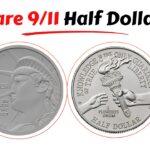
The half dollar replaces the Kennedy design for one year. It is the first half dollar since 1964 issued without President John F. Kennedy’s portrait. The Kennedy half dollar dates to 1964, and the Mint restarted circulating half dollar production in 2021 after a lull. Donna Weaver is credited with the obverse design and Beth Zaiken with the reverse, sculpted by John McGraw and Darla Jackson respectively. In August, the Mint presented 2,983 specially struck half dollars to the National 9/11 Memorial & Museum.
Native American Dollar
The Native American $1 coin has been struck since 2009, following the Sacagawea dollar of 2000–2008, and its obverse still shows Sacagawea and her infant son. The Federal Reserve no longer orders these for circulation, so the Mint strikes them for collectors. Its 2026 reverse reportedly honors the Oneida people; check the Mint’s materials for the full design description.
President Donald J. Trump $1 Coin
Treasury Secretary Scott Bessent announced the final design in July 2026, and the coin went on sale September 2. Joseph Menna, the Mint’s chief engraver, is credited with the obverse portrait, and the reverse is credited to the late chief engraver Frank Gasparro and depicts the Great Seal eagle. The coin is struck only at Philadelphia, has no mint mark, and is being sold to collectors and released for circulation.
It is the second time a U.S. president has appeared on a coin during his lifetime, following Calvin Coolidge on the 1926 Sesquicentennial half dollar. The coin has also been controversial. Treasury and Mint officials say legal research affirms it complies with the authorizing law, and a lawsuit seeking to block it was dismissed in July after a judge declined to issue a preliminary injunction without ruling on the coin’s lawfulness. Critics, including some members of the coinage advisory committee and lawmakers, argue that a living person’s portrait breaks with tradition and the spirit of the law.
Design Descriptions
| Coin | Obverse | Reverse |
|---|---|---|
| Nickel | Thomas Jefferson portrait, with 1776 ~ 2026 dual date | Monticello (unchanged) |
| Emerging Liberty dime | Liberty wearing a Liberty cap | Eagle in flight clutching arrows |
| Mayflower Compact quarter | A Pilgrim man and woman embracing, under an E PLURIBUS UNUM banner | The Mayflower ship |
| Revolutionary War quarter | George Washington | A Continental Army soldier overlooking Valley Forge |
| Declaration of Independence quarter | Thomas Jefferson, with E PLURIBUS UNUM, IN GOD WE TRUST and 1776 ~ 2026 | The Liberty Bell ringing, with its crack visible |
| U.S. Constitution quarter | James Madison | Independence Hall’s steeple, with WE THE PEOPLE above the roofline and the clock set to 2:50 |
| Gettysburg Address quarter | Abraham Lincoln | Two clasped hands beneath a line from the Gettysburg Address, “a new nation conceived in liberty” |
| Enduring Liberty half dollar | The Statue of Liberty | Hands passing Liberty’s torch |
| Native American $1 | Sacagawea and infant son (standard obverse) | 2026 design honoring the Oneida |
| Trump $1 | President Trump in suit and tie, facing nearly forward | Great Seal of the United States eagle |
A few details stand out. The Constitution quarter’s clock reading of 2:50 is a nod to the 250th anniversary. The Mayflower Compact quarter’s reverse recalls an earlier commemorative half dollar from a century ago, and several of the quarters borrow portraits from Mint programs of the past 20 years, tying the 2026 issues to earlier chapters of U.S. coinage.
Special Varieties and Privy Marks
- JULY 4th privy mark Declaration quarters: The Mint announced on June 23 that it would place 250,000 of these quarters into circulation, ahead of Independence Day. They carry no mint mark.
- JULY 4th privy mark Trump dollars: 250,000 dollars struck on July 4 are randomly mixed into the rolls and bags sold beginning September 2.
- 9/11 memorial half dollars: The 2,983 half dollars presented to the National 9/11 Memorial & Museum in August were specially struck. A later report says the Mint has also announced a limited-time sale of 9/11 privy-mark half dollars struck at Philadelphia, which you should confirm on the Mint’s site.
Why This Matters for Collectors
Production is unusually lumpy, and design mintages vary widely. Compare the Mayflower Compact quarter’s 316.4 million with the Gettysburg Address quarter’s 2.8 million so far. The Gettysburg total will grow once full production begins, but it shows how much a design’s timing can change how many exist. Watch the mint-by-mint splits, too: Philadelphia’s Constitution quarter stands at just 7.0 million against Denver’s 56.4 million.
Fed orders shape everything. Since the Mint produces coins based on the Federal Reserve’s requests, a low month does not necessarily mean demand disappeared. It can reflect the timing of Fed orders and how much inventory the banking system already holds. That is the caution to keep in mind when comparing months.
No cents in circulation changes the math. Removing cents from the circulating mix lowers the year’s overall totals and makes year-over-year comparisons with periods before August 2025 less meaningful. It also means the 1776 ~ 2026 cent exists only in collector products.
Half dollars are being made at a much higher pace than usual. With 83 million struck in eight months, this is far above 2025’s total, yet the half dollar still moves slowly through banks. Collectors should expect a large mintage but should not assume easy pocket-change finds, and the Mint’s public roll and bag sales have been strong, with rolls hitting their product limit and most bags sold.
Sold-out products are a signal, not a guarantee. Many of the Mint’s rolls and bags disappeared within minutes or hours, including the Trump dollar bags in under an hour. Sales speed shows enthusiasm, but future prices are unpredictable, and nothing here is investment advice.
One-year-only status and dual dates. The 1776 ~ 2026 designs are authorized for 2026 only, which gives the year a natural end point and makes complete sets more manageable.
Documented controversy is part of the story. From the design changes to the Trump dollar’s legal debate, this program will be discussed for years, and collectors who keep records of the design process will be better placed to explain each piece’s context.
Quick-Reference Buying Guide
- Decide your goal. Choose between finding coins in circulation, buying Mint rolls and bags, or buying on the secondary market for anything sold out.
- Create or update your U.S. Mint account on usmint.gov before any launch. Confirm payment and shipping details.
- Sign up for alerts through the Mint’s email and text notifications and its product schedule, so you learn dates and times early.
- Watch for the Gettysburg Address quarter. Circulation is expected this fall. The Mint lists a household limit of 2 on its rolls and bags, with no sale date yet.
- Be ready on launch day. Recent launches sold out in minutes to hours, and the Trump dollar bags sold out in under an hour, so log in early with your details saved.
- Check limits and availability on each product page. Confirm household limits, product limits and remaining stock. The half-dollar bag has had limited stock left, and rolls have hit their limit.
- Search circulation. Ask your bank for rolls of quarters and dimes, and check change for the JULY 4th privy mark quarters and dollars.
- Track the mintage data. The Mint’s circulating production reports (published monthly) and CoinNews’ summaries help you see which designs and mints are scarcer.
- Store carefully. Keep new coins in protective holders or tubes, away from fingers and moisture.
- Verify before you buy secondhand. For sold-out items, compare prices across reputable dealers and confirm details such as privy marks.
Note: Production figures reflect the Mint’s reported data through August 2026 and can be revised. Prices, limits, release dates and product availability change often, so verify them on the U.S. Mint’s official product pages. Design credits are drawn from published Mint credit lists and should be checked against Mint materials before publication.