American currency collectors have long chased two kinds of fame: the artistry of a design and the scarcity of a survivor. It is rare for a single note to earn both distinctions at once but the 1890 $100 “Watermelon” Treasury Note has done exactly that for well over a century. Layered on top of its striking green reverse and razor-thin surviving population is a genuine slice of Civil War history and a snapshot of one of the 19th century’s fiercest monetary battles.
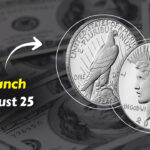
Now, collectors have another chance to chase this trophy. GreatCollections has scheduled a Friedberg 377 example an 1890 $100 Treasury Note graded PMG Very Fine 20 with a Restoration notation for sale on Sunday, October 4, 2026. The note carries a notable pedigree, having come out of the Schwenk Family Collection, a registry set built around the “100 Greatest American Currency Notes.” According to the auction listing, bidding is set to close at 7:11:50 p.m. Pacific Time.
What makes this sale worth watching isn’t just the note itself, but the numbers behind it. Researchers estimate only about 35 examples of Fr. 377 still exist out of an original press run of 120,000. Institutions are believed to hold somewhere between seven and eight of those survivors, which leaves well under 30 notes that could realistically ever reach the collector market. Put another way, roughly one Watermelon $100 has survived for every 3,400 that rolled off the press in 1890.
Quick-Reference Specifications
| Category | Detail |
|---|---|
| Country | United States |
| Series | 1890 |
| Denomination | $100 |
| Note Type | Treasury Note (also called a “Coin Note”) |
| Friedberg Number | Fr. 377 |
| Nickname | “Watermelon Note” or “Baby Watermelon” |
| Printer | Bureau of Engraving and Printing |
| Authorizing Legislation | Sherman Silver Purchase Act, July 14, 1890 |
| Face Portrait | Admiral David Glasgow Farragut |
| Signatures | William Starke Rosecrans (Register of the Treasury); James Nelson Huston (Treasurer of the United States) |
| Treasury Seal | Large brown, spiked seal |
| Reverse Design | Dense green lathework with two oversized ornamented zeros |
| Original Print Run | 120,000 notes |
| Estimated Survivors Today | Approximately 35 |
| Institutional Holdings | 7–8 notes, by most census estimates |
| Approximate Dimensions | 7.8 x 18.8 cm (about 3 1/16 x 7 13/32 in.), per the Smithsonian’s example |
| Featured Example Grade | PMG Very Fine 20, Restoration |
| PMG Certification Number | 1998552-001 |
| Provenance | Schwenk Family Collection, “100 Greatest American Currency Notes” |
| Auction House | GreatCollections |
| Auction Date/Time | October 4, 2026, closing at 7:11:50 p.m. Pacific Time |
How to Bid: The Auction Process
For collectors interested in pursuing this note, or simply tracking how it performs, here is what’s known about the sale mechanics:
- Auction platform: GreatCollections, an online auction house that specializes in certified coins and currency and is well known for transparent, publicly viewable bidding.
- Sale date: Sunday, October 4, 2026.
- Closing time: 7:11:50 p.m. Pacific Time GreatCollections auctions typically close lots individually at staggered times rather than all at once, so bidders should confirm the exact lot closing time on the platform as the date approaches.
- Lot format: Single-lot sale of one certified note, not a bulk or grouped offering.
- Grading and authentication: The note is independently certified by PMG (Paper Money Guaranty), with the grade and any notations — in this case Very Fine 20 with a Restoration note clearly stated in the holder and listing.
- Bidder registration: As with most GreatCollections sales, prospective bidders will need a registered account on the platform before placing bids; new bidders should plan to register well ahead of the closing time.
- No fixed mintage-style “order limit”: Because this is a single, one-of-a-kind certified note sold at auction rather than a mint product release, there are no purchase caps, household limits, or subscription windows to track it comes down to competitive bidding against other collectors in real time.
- Buyer’s premium: Auction houses typically add a buyer’s premium on top of the hammer price; bidders should check GreatCollections’ current premium structure before bidding, since this affects the true final cost.
Because population data for Fr. 377 is so thin, interested bidders are well advised to research recent comparable sales (see the pricing section below) before setting a personal bidding ceiling.
Historical Background
The Sherman Silver Purchase Act and the Birth of the Treasury Note
The Watermelon Note’s story doesn’t start in an engraver’s studio it starts in Congress. On July 14, 1890, lawmakers passed the Sherman Silver Purchase Act, a law that required the U.S. Treasury to buy up to 4.5 million ounces of silver bullion every month. To pay for those purchases, the government issued a new class of paper currency that collectors today call Treasury Notes, or “Coin Notes.”
These notes stood apart from the more familiar Silver Certificates of the era in one crucial way: redemption flexibility. A Treasury Note’s obligation promised repayment in coin but the Treasury secretary could choose to redeem it in either gold or silver, at his discretion. The notes also carried full legal tender status, meaning they could settle debts just like any other U.S. currency. That obligation language a promise to pay the bearer one hundred dollars in coin appears directly on the face of the note, a detail confirmed by the Smithsonian’s National Numismatic Collection.
In short, the $100 Watermelon Note isn’t just a beautifully engraved bill. It’s a physical artifact of one of the most contentious economic fights of the Gilded Age: the ongoing national argument over whether America’s currency should be backed by gold, silver, or both.
Admiral Farragut: A Civil War Hero on Currency
The note’s obverse ties it to an entirely different chapter of American history the Civil War. The portrait dominating the right side of the bill belongs to Admiral David Glasgow Farragut, one of the Union Navy’s most celebrated commanders.
Farragut’s rise through naval history was rapid and dramatic. The Navy promoted him to rear admiral in 1862. Two years later, on August 5, 1864, he led Union naval forces into Mobile Bay, Alabama, one of the last major Confederate ports still open on the Gulf Coast. The channel was seeded with Confederate mines referred to at the time as “torpedoes” and after the Union monitor USS Tecumseh struck one and sank, Farragut famously pressed his fleet forward regardless of the danger. That moment produced one of the most quoted lines in American military history, popularly remembered as “Damn the torpedoes, full speed ahead!” While historians note that the exact wording varies across contemporary accounts, the U.S. Naval History and Heritage Command still credits Farragut with the spirit and substance of that command.
His career continued to break new ground after the war. Later in 1864, Farragut became the Navy’s first vice admiral. Then, in 1866, an act of Congress made him the first full admiral in the history of the United States Navy a rank that had never before existed in the American armed forces.
Placing Farragut’s portrait on this Treasury Note gives Fr. 377 a rare distinction: it is simultaneously a monument to a 19th-century monetary dispute and a tribute to Civil War naval heroism.
From “Baby Watermelon” to “Grand Watermelon”: A Family of Icons
The 1890 $100 note is part of a small but legendary family. Its much rarer sibling, the 1890 $1,000 Treasury Note, carries three oversized ornamented zeros on its reverse rather than two, and it earned the nickname “Grand Watermelon.” Because of that relationship, the $100 denomination is often called the “Baby Watermelon” by collectors and dealers.
In the influential reference book 100 Greatest American Currency Notes, authors Q. David Bowers and David M. Sundman ranked the $1,000 Grand Watermelon as the single greatest American currency note of all the No. 1 spot. The $100 Baby Watermelon earned its own place on that list at No. 18, cementing its status as a top-tier rarity in its own right, even if it lives somewhat in its larger sibling’s shadow.
Design Details: Obverse and Reverse
The Obverse
The face of the Fr. 377 note centers on the striking portrait of Admiral David Glasgow Farragut, positioned to the right of the design. A large numeral “100” counter sits just left of center, immediately identifying the note’s denomination. Ornate floral engraving fills the corners of the note, a hallmark of the elaborate Bureau of Engraving and Printing artistry of the period. Anchoring the whole composition is a large brown Treasury Seal with a distinctive spiked border, a design element used across several Treasury Note denominations of the era. Below the portrait and design elements, the signatures of William Starke Rosecrans, Register of the Treasury, and James Nelson Huston, Treasurer of the United States, authenticate the note.
The Reverse
The reverse is where this note earns its enduring nickname and its lasting fame. Heavy, intricate green geometric engraving covers nearly the entire back of the bill. Dominating the design are two enormous zeros from the “100” denomination, each filled with dense, swirling lathework patterns. Their oval shapes and busy internal detailing gave them a visual resemblance to watermelons when viewed by early collectors, and the nickname took hold almost immediately.
That elaborate reverse turned out to be short-lived by design standards of the era. Treasury officials came to believe that a busier, more ornamented reverse actually made it harder for bank tellers and members of the public to visually verify a note’s authenticity. Open, simpler spaces were thought to encourage closer inspection of fine engraving details, which in turn made counterfeits easier to catch. As a result, the very next series the 1891 $100 Treasury Notes dropped the dense Watermelon reverse entirely in favor of what collectors now call the “Open Back” design.
That decision effectively made the Watermelon reverse a one-series design experiment brief, but unforgettable, and exactly the kind of short production run that tends to create lasting numismatic icons.
Why This Matters for Collectors
Several factors combine to make the 1890 $100 Watermelon Note a standout entry on any advanced collector’s want list:
- Genuine, extreme rarity. With roughly 35 known survivors from an original run of 120,000, and as many as eight of those locked away in institutional collections, the number of notes that could ever change hands among private collectors is small and shrinking.
- A design story that sells itself. Unlike many rarities that require a loupe, a reference book, or specialized attribution knowledge to appreciate, the Watermelon Note’s appeal is instantly visible. Flip the note over, and the nickname makes sense immediately.
- Layered historical significance. Few notes connect two entirely separate storylines a national argument over silver-backed currency and a celebrated Civil War naval victory in a single piece of paper money.
- A design the Treasury itself abandoned. Because officials moved away from the ornamented reverse after just one series, the Watermelon design represents a genuine one-time experiment in American currency history, rather than a long-running type.
- Association with a seven-figure sibling. The $1,000 Grand Watermelon’s headline-making prices including a $2.04 million sale by Stack’s Bowers in 2018 and a $3.29 million result at Heritage in January 2014 for an even rarer small-seal variety cast a long shadow that boosts collector interest in the more (relatively) attainable $100 version.
- A track record of strong, condition-sensitive results. Recent sales illustrate just how much grade and originality affect price. Heritage sold a PMG Very Fine 20 example with restoration for $114,000 in September 2024. A PMG Very Fine 30 realized $228,000 in May 2024, and another VF30 brought $336,000 in January 2023. At the high end, a PMG Choice Uncirculated 63 EPQ example from the D. Brent Pogue Collection described by PMG as the finest known and the only note it had certified in Uncirculated condition sold for $372,000 in March 2020.
Given that population size, market watchers caution against treating any two Watermelon Note sales as directly comparable. With so few examples in existence, factors like paper quality, restoration, centering, color, and provenance can meaningfully separate one note’s result from another’s, even at similar assigned grades.
Quick-Reference Buying Guide
- Confirm the sale details. Verify the lot is listed on GreatCollections and note the exact closing time 7:11:50 p.m. Pacific Time on October 4, 2026 since online auctions often close lots individually rather than all at once.
- Register as a bidder. Create or log into a GreatCollections account well before the sale date so there are no last-minute delays.
- Review the certification. Check the PMG certification number (1998552-001) directly through PMG’s public lookup tools to confirm the grade (Very Fine 20) and the Restoration notation before bidding.
- Research comparable sales. Compare recent Fr. 377 auction results such as the $114,000 September 2024 Heritage sale of a similarly graded VF20 Restoration example to gauge a realistic price range for this grade and condition.
- Account for the buyer’s premium. Factor GreatCollections’ current buyer’s premium into your maximum bid so the “true” total cost doesn’t exceed your budget.
- Set a firm bidding limit. Given the note’s rarity and the emotional pull of a “trophy” purchase, decide on a hard ceiling in advance and stick to it.
- Watch the provenance value. Remember this example carries Schwenk Family Collection pedigree as part of a “100 Greatest American Currency Notes” registry set, which can add collector appeal beyond the raw grade.
- Place your bid before the close. Monitor the lot as the closing time approaches, since online currency auctions can see significant late bidding activity in the final minutes.
This article is provided for informational purposes. Collectors should independently verify auction details, certification numbers, and final sale terms directly through GreatCollections and PMG before bidding.