Walk into a coin shop or open an auction catalog for the first time, and the numbers can be dizzying. One silver dollar sells for the price of a lunch, while another that looks nearly identical sells for the price of a car. Why?
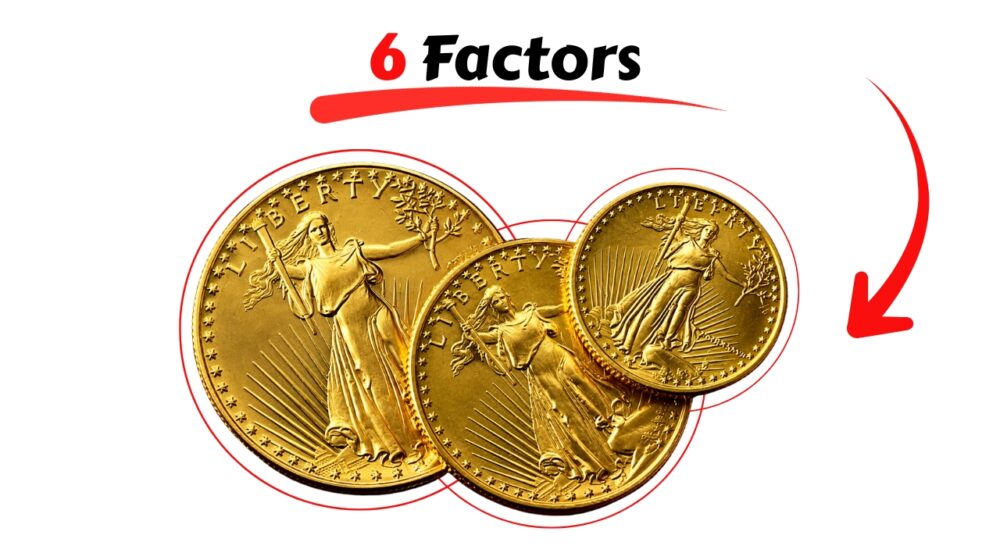
The good news is that coin pricing is not random. Six factors do most of the work: rarity, condition, historical significance, collector demand, material composition and emotion. None of them acts alone, and the market’s verdict on any coin is a blend of all six. Learn how each one works and you will make better decisions when you buy, sell or simply admire a coin.
This guide takes the factors one at a time, shows how they appear in real coins, and ends with a step-by-step checklist you can use before your next purchase.
The Six Factors at a Glance
| Factor | What It Means | Why It Moves Price | Watch Out For |
|---|---|---|---|
| Rarity | How few coins exist, from low mintage or heavy attrition | Scarce coins draw more bidders than there are coins | “Manufactured rarities” nobody wants |
| Condition | Preservation and grade on the 1–70 Sheldon Scale | Better-preserved coins sell for more | Uncertified or inaccurately graded coins |
| Historical significance | Ties to major events, eras or people | A story adds appeal beyond the metal | Paying for the story and nothing else |
| Collector demand | How many people want the coin or series | Popular series hold prices even when not rare | Demand can fade |
| Material composition | Gold, silver, copper, or base metal content | Precious metals set a value floor | Spot-price swings |
| Emotion | The “it factor,” eye appeal, competitive bidding | Passion can push a price past the guides | Overpaying in the heat of the moment |
Factor 1: Rarity, the Foundation of Value
Rarity is the factor beginners notice first, and with good reason. Coins struck in small numbers, or during short production runs, often cost more. So do coins with distinctive features that set them apart from their neighbors in a series.
Mintage alone does not tell the whole story, though, because coins disappear over time. Melting, loss, damage and neglect all reduce the number that survive, and some coins that once seemed ordinary now count as rare.
Case study: the 1927-D Saint-Gaudens Double Eagle. The Denver Mint struck 180,000 of these $20 gold pieces. That figure sounds respectable. But the great majority were melted in the government’s gold recall of the 1930s, and only around 14 or 15 are known today. Every survivor carries significant value regardless of grade.
The caution. Do not rely on rarity by itself. Modern mints and private issuers often produce limited-edition pieces with small mintages. If collectors do not want them, a low production number means little. The hobby calls these manufactured rarities, and they are a common beginner’s trap.
Factor 2: Condition, the State of Preservation
Two coins of the same date and mint can sell for wildly different prices if one is worn and the other is pristine. Mint State (MS) and About Uncirculated (AU) coins generally outperform worn or damaged pieces.
Because condition matters so much, accurate grading matters too. Beginners can learn from grading guides, but the market largely relies on third-party certification. The two major grading services are PCGS (Professional Coin Grading Service) and NGC (Numismatic Guaranty Company). Both assign grades on the Sheldon Scale, from 1 to 70, with 70 representing a perfect coin.
A third name you will often see is CAC (Certified Acceptance Corporation). CAC does not grade coins. It reviews coins that PCGS or NGC have already graded and awards a sticker to those it judges solid for the assigned grade or better. Many collectors treat a CAC sticker as an added quality signal.
Age affects grades. Vintage coins rarely reach the top of the scale. Modern coins such as American Silver Eagles, proof issues and commemoratives often grade 69 or 70. Because so many modern coins reach those grades, other factors, such as demand and rarity, tend to decide their final prices.
Factor 3: Historical Significance, a Story That Sells
Coins are small pieces of history, and collectors pay for the stories they carry. Coins tied to major events or eras often attract more interest than those from ordinary years.
Two examples show how this works:
- California Gold Rush coinage. Coins from the Gold Rush era are perennial favorites. One example from the source material is the Pacific Company $5 gold coin, which sold for $1.26 million.
- Civil War-era issues. Coins such as the 1864 Two-Cent Piece remain popular because of the period they represent.
History can also shape rarity and condition. Events such as wars, recalls and melts determine how many coins survive and in what state, which is why a good story often comes with a scarce coin.
Factor 4: Collector Demand, the Driving Force
Demand moves the market. Even a common coin can rise in value when plenty of collectors want it, and a rare one can stagnate when few do.
Series with enduring followings include:
- Morgan and Peace Silver Dollars
- Lincoln Cents
- Buffalo Nickels
- Standing Liberty Quarters
- Bust Half Dollars
These coins are not necessarily the scarcest, but steady collector interest helps keep prices firm.
Demand changes. In the early 1980s, prices for classic commemorative coins surged as collectors admired their rarity, condition and history. Later, interest faded. Even issues with mintages of only 2,000 to 3,000 began to seem plentiful, and prices fell because fewer buyers were competing for them. The lesson: low mintage plus a vanishing audience is not a recipe for strong prices.
Factor 5: Material Composition, Intrinsic Value Matters
Gold and silver coins carry value for their metal alone, and that value rises and falls with the bullion markets. This gives precious metal coins a floor that base-metal coins lack, even if the coin is common.
Composition also affects the other factors indirectly:
- Survivability. Gold coins were often melted, which reduced supply and made survivors scarcer.
- Desirability. Many collectors simply prefer coins made from precious metals.
- Preservation. Gold and silver are soft metals that can show marks easily. Copper reacts with its environment and can tarnish or corrode.
So composition works in two ways: directly, through bullion value, and indirectly, through its influence on scarcity, appeal and condition.
Factor 6: Emotion, the “It Factor”
The final factor is the one no price guide can capture. Collectors sometimes compete fiercely for a coin they adore, and passion can overpower any published value.
The Pittman example. Legendary collector John Jay Pittman used what became known as the “Statue of Liberty” bidding strategy to win a Proof 1854 gold coin at auction. He kept his hand raised and locked eyes with his rivals, signaling that he would not back down. It worked, and he took home the coin.
Eye appeal is part of this factor. A Morgan Dollar with beautiful natural toning can sell for multiples of the usual price because buyers fall in love with it.
The risk. Emotion also causes costly mistakes. Before making a major purchase, talk to experienced professionals and set a firm limit.
Case-Study Coins: Background and Design
The following coins from the source material show several of the six factors at work. Where the source gave no design details, the background below is general numismatic knowledge and should be double-checked before publication.
1927-D Saint-Gaudens Double Eagle ($20 gold)
- Designer: Augustus Saint-Gaudens
- Series years: 1907–1933
- Mintage: 180,000 (Denver)
- Survivors: Around 14 or 15
- Significance: The classic example of how attrition can turn a coin with a seemingly moderate mintage into a major rarity.
- Obverse: Liberty strides forward with a torch and an olive branch, the Capitol behind her.
- Reverse: An eagle in flight above a rising sun.
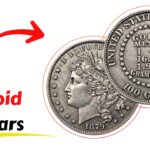
1875 Three-Dollar Gold Piece
- Designer: James B. Longacre
- Series years: 1854–1889
- Grade in source: PCGS Proof-64 Cameo with CAC
- Significance: The 1875 date is among the scarcest in the series, made only in proof format in tiny numbers, which shows rarity, condition and demand working together. The “Cameo” designation refers to frosted devices that contrast with mirrored fields.
- Obverse: A head of Liberty wearing a feathered Indian-style headdress.
- Reverse: A wreath of agricultural products surrounding the denomination and date.
1854 Proof Three-Dollar Gold Piece
- Grade in source: PCGS PR65 Cameo
- Significance: The source ties this denomination to the Pittman story above, in which emotion and determination decided the outcome at auction. The design is the same Longacre type as the 1875 coin.
1864 Two-Cent Piece
- Designer: James B. Longacre
- Series years: 1864–1873
- Significance: The source cites it as a popular Civil War-era issue. It is also known as the first U.S. coin to carry the motto IN GOD WE TRUST.
- Obverse: A shield with the motto above.
- Reverse: A wreath surrounding the denomination.
Pacific Company $5 Gold Coin
- Significance: A Gold Rush-era issue that sold for $1.26 million, according to the source. It shows how historical significance and rarity support extraordinary prices.
- Design: The source gives no design details, so they are omitted here.
Why This Matters for Collectors
It protects you from overpaying. Knowing the six factors helps you tell the difference between a coin that is genuinely scarce and one that is merely low in mintage.
It helps you buy with confidence. Certified grades from PCGS or NGC, and the CAC sticker where applicable, give you a common language for condition.
It explains price swings. When prices for a series fall or rise, the cause is usually a shift in demand, bullion prices or collector emotion, not a change in the coin itself.
It teaches discipline. Because emotion is the factor that can hurt you, understanding it makes you a steadier bidder and buyer.
It improves with experience. As you gain experience, weighing the six factors becomes second nature, and your decisions become faster and sounder.
Quick-Reference Buying Guide
- Decide what you want to collect. A defined series or theme keeps your buying focused and your costs under control.
- Check the rarity. Look at mintage, survivors and how many are available in the grade you want. Be wary of “limited editions” that few people are asking for.
- Look for certification. For significant purchases, choose coins graded by PCGS or NGC. A CAC sticker adds a further quality signal.
- Check the grade against the price. A small grade difference can mean a large price difference, so compare recent sales for the same grade.
- Consider the story. Ask whether the coin’s history is a real source of lasting interest or just a sales pitch.
- Gauge demand. Popular series like Morgans, Lincoln Cents and Buffalo Nickels tend to have ready buyers, while niche or faded areas can be hard to sell.
- Check the metal. For gold and silver coins, compare the price to the bullion content so you know how much you are paying above melt value.
- Look at the coin itself. Eye appeal, such as attractive toning or strong luster, can matter a great deal.
- Set a limit and keep to it. Decide your maximum before bidding so emotion does not decide for you.
- Get advice on big purchases. Consult an experienced dealer or collector before spending serious money.
This article is for educational purposes and is not financial advice. Prices and market conditions change, and examples are drawn from published sources.