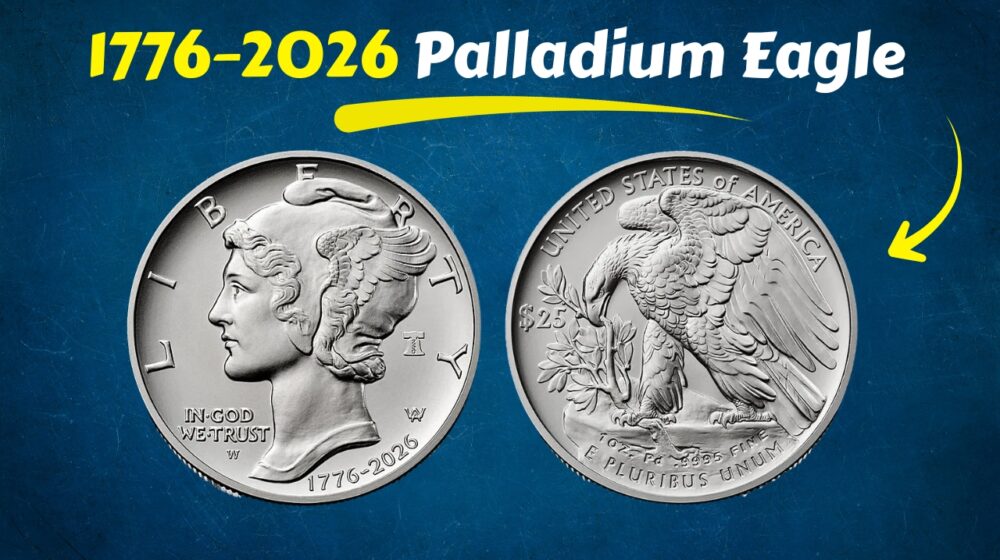
The United States Mint put the 2026-W $25 Uncirculated American Palladium Eagle on sale at noon Eastern Time on Thursday, Sept. 3, 2026. The one-ounce, West Point-struck coin is a one-year-only Semiquincentennial issue, carrying a 1776 ~ 2026 dual date and a Liberty Bell privy mark containing the numeral 250. Its mintage was capped at just 5,000 coins, and the Mint priced it at $1,895.
The limit turned out to matter. The coin became unavailable from the Mint about eight minutes after sales opened, and the Mint’s Sept. 9 sales report showed 4,778 coins sold, or about 95.6% of the authorized ceiling. That makes it the second-lowest final sales total in the American Palladium Eagle series, behind only last year’s 2025-W Reverse Proof at 3,991.
The coin joins a growing family of 2026 American Eagle issues dressed for the nation’s 250th birthday, following this year’s gold and silver Enhanced Uncirculated releases carrying the same dual date and Liberty Bell privy. Like every Palladium Eagle before it, it pairs two classic designs by sculptor Adolph A. Weinman: the Winged Liberty of the Mercury dime on the obverse and the eagle from the 1907 American Institute of Architects Gold Medal on the reverse.

2026-W Uncirculated American Palladium Eagle: Specifications at a Glance
| Detail | Information |
|---|---|
| Product | American Eagle 2026 One Ounce Palladium Uncirculated Coin |
| Mint item number | 26EK |
| On-sale date | Thursday, Sept. 3, 2026, at 12 noon ET |
| Launch price | $1,895 (subject to weekly adjustment under the Mint’s precious metals pricing matrix) |
| Mintage limit | 5,000 coins |
| Product limit | 5,000 coins |
| Household order limit | 1 coin for the first 24 hours |
| Reported sales | 4,778 (Mint sales report of Sept. 9, 2026) |
| Denomination | $25 |
| Finish | Uncirculated |
| Composition | 99.95% palladium |
| Palladium fine weight | 1.000 troy ounce |
| Diameter | 1.340 inches (34.03 mm) |
| Edge | Reeded |
| Mint and mint mark | West Point, “W” |
| Privy mark | Liberty Bell with the numeral 250 |
| Dates on coin | 1776 ~ 2026 |
| Designer (both sides) | Adolph A. Weinman (obverse 1916 design, reverse 1907 design) |
| Authorizing legislation | Public Law 111-303 (American Eagle Palladium Bullion Coin Act of 2010) |
Ordering Details: Dates, Limits and Price
When it went on sale. The Mint opened orders for the 2026 Palladium Eagle at noon ET on Sept. 3, 2026. The coin was announced in advance, and collectors could see it listed as an upcoming release under item number 26EK.
Where. Orders were taken through the Mint’s palladium product page on usmint.gov, which was the only source for the coin at its issue price.
Limits. Two limits applied. The first was a hard ceiling of 5,000 coins, which the Mint lists as both the mintage limit and the product limit. The second was a household order limit of one coin during the first 24 hours after launch. The Mint notes that household limits are typically lifted after that window and can be added, adjusted or removed at its discretion.
Price. The coin opened at $1,895. Under the Mint’s precious metals pricing matrix, prices on products like this one can be adjusted weekly as market conditions change, so buyers on future palladium products should expect the sticker price to move with the metal. For comparison, the very first proof Palladium Eagle in 2018 launched at $1,387.50, and last year’s Reverse Proof opened at $1,695.
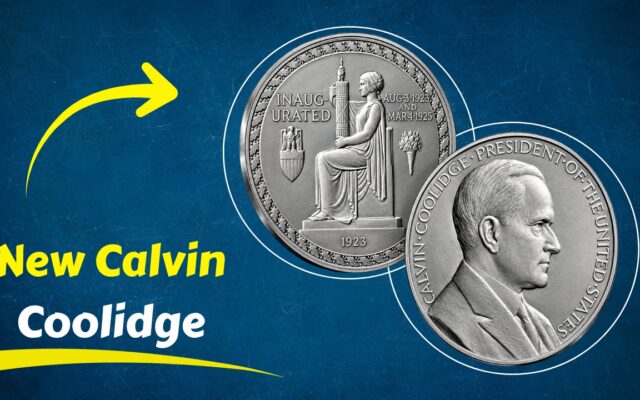
How it played out. The coin became unavailable roughly eight minutes after noon ET. Combined with the low authorization, that means the order window at the Mint effectively closed the same day it opened. It placed fourth in the Mint’s Sept. 9 sales report, behind the Trump dollar rolls and bags and the Calvin Coolidge Presidential Silver Medal, all of which also launched in early September.
Where things stand now. As of the most recent reports available when this article was written, the coin was no longer being offered by the Mint. Buyers who missed the launch will need to look to the secondary market, and the Mint’s tally may shift slightly as orders are processed, so check the product page for the latest status.
Historical Background
The 2026 coin brings together several separate strands of American numismatic history: a fairly new bullion-and-collector series, two much older Weinman designs, and a one-year Semiquincentennial treatment.
The American Palladium Eagle Series (2017 to Present)
Authorized: Public Law 111-303, signed in December 2010 First release: 2017 (bullion); 2018 (first collector version)
Congress authorized a one-ounce palladium bullion coin in 2010, but it took until 2017 for the coin to reach the market. The law allows only the one-ounce size, with a $25 face value and .9995 purity, and it also permits proof and uncirculated versions for collectors. It also spelled out the designs: an adaptation of Weinman’s Winged Liberty on the obverse and his eagle from the 1907 American Institute of Architects medal on the reverse.
The 2017 bullion coin was offered to the Mint’s Authorized Purchasers on Sept. 25, 2017, in a quantity of 15,000, and it sold out on the first day. The Mint followed with the first collector version, the 2018-W Proof, on Sept. 6, 2018 at $1,387.50. Sales were reportedly paused within minutes to verify orders against the 15,000-coin limit, and the coin finished at 14,986.
Since then, the collector version has rotated among finishes: reverse proof in 2019, uncirculated in 2020, proof in 2021, and so on, with the 2026 issue returning to uncirculated. The history of the series’ demand looks like this:
| Year | Version | Mintage limit | Reported final sales |
|---|---|---|---|
| 2017 | Bullion | 15,000 | 15,000 |
| 2018-W | Proof | 15,000 | 14,986 |
| 2019-W | Reverse Proof | 30,000 | 18,839 |
| 2020-W | Uncirculated | 10,000 | 9,746 |
| 2021 | Bullion | 8,700 | 8,700 |
| 2021-W | Proof | 12,000 | 5,170 |
| 2022-W | Reverse Proof | 7,500 | 7,439 |
| 2023-W | Uncirculated | 6,000 | 5,784 |
| 2024-W | Proof | 7,500 | 5,961 |
| 2025-W | Reverse Proof | 6,000 | 3,991 |
| 2026-W | Uncirculated | 5,000 | 4,778 |
The pattern is plain to see. After a peak of 18,839 in 2019, the Mint has steadily trimmed its mintage limits, from 30,000 down to 5,000, and sales have followed a similar path. Only 2025 finished lower than 2026.
Adolph A. Weinman’s Winged Liberty (1916)
Designer: Adolph A. Weinman (1870–1952), a German-born American sculptor Original coin: The Winged Liberty Head dime, struck from 1916 to 1945
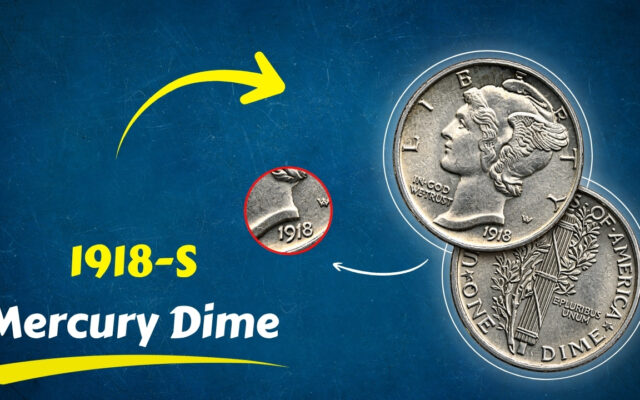
Weinman’s Liberty wears a winged cap, a symbol of freedom of thought. The public assumed it depicted the Roman god Mercury, and the coin has been known as the “Mercury dime” ever since. It is one of the best-loved U.S. coin designs of the 20th century. (The model is traditionally said to have been Elsie Stevens, wife of the poet Wallace Stevens.) Weinman also designed the Walking Liberty half dollar, which debuted the same year.
The design has been revived repeatedly. The Mint brought it back on the 2016 Winged Liberty Centennial gold coin, part of a three-coin set honoring the classic designs of 1916, and again in 2017 for the Palladium Eagle. This year it returns for the 250th-anniversary palladium issue, and the Mint has also revisited it as part of its Best of the Mint series. On the Palladium Eagle, the portrait is struck in high relief and appears far larger than it ever did on a ten-cent piece, which many collectors count as a major part of its appeal.
The 1907 American Institute of Architects Gold Medal Eagle
Designer: Adolph A. Weinman Original use: Reverse of the American Institute of Architects (AIA) Gold Medal, first awarded in 1907
The Palladium Eagle’s reverse is the lesser-known half of the pairing. Weinman created the eagle for the AIA Gold Medal, the organization’s highest honor, with the first medal bearing his design awarded in 1907. To produce the coin, the Mint scanned and used the original plaster of the medal’s reverse, and the 2017 Palladium Eagle was the first time this design appeared on a U.S. coin.
The standing eagle bears a family resemblance to the bird on Weinman’s Walking Liberty half dollar reverse, though here the eagle stands on a rock, wings lifted, with a branch in its beak.
The 2026 Semiquincentennial Treatment
July 4, 2026 marked 250 years since the Declaration of Independence, and the Mint has marked the occasion with one-year-only design elements across its precious-metals line: the 1776 ~ 2026 dual date and a Liberty Bell privy mark bearing the numeral 250. The Palladium Eagle followed the 2026 One Ounce Gold Enhanced Uncirculated Coin (limited to 7,500 coins, released May 28) and the 2026 One Ounce Silver Enhanced Uncirculated Coin (limited to 125,000 coins at $169, released July 21). Each was struck at West Point and carries the same two features.
Design Description: Obverse and Reverse
Obverse
The front shows Weinman’s Winged Liberty in a high-relief rendition: a profile portrait of Liberty in a winged cap, filling much more of the field than she did on the dime. The inscriptions are LIBERTY and IN GOD WE TRUST, together with the dual date 1776 ~ 2026 in place of the usual single year, and Weinman’s distinctive monogram. The “W” mint mark identifies production at the West Point Mint. The Liberty Bell privy mark, containing the numeral 250, is the special addition marking the anniversary.
Reverse
The back features the high-relief eagle from the 1907 AIA Gold Medal, a standing bird with raised wings perched on a rock and grasping a branch. The inscriptions are UNITED STATES OF AMERICA, $25, 1 OZ. Pd .9995 FINE (Pd being the chemical symbol for palladium) and E PLURIBUS UNUM.
Finish and Edge
The coin has an Uncirculated finish, a reeded edge, and a 34.03 mm diameter (1.340 inches), the same size as every Palladium Eagle in the series. Each coin contains one full troy ounce of 99.95% palladium.
Why This Matters for Collectors
It’s a one-year-only design in a small series. The dual date and privy mark appear only on 2026 products, so the Palladium Eagle is the sole palladium piece in this year’s family of 250th-anniversary American Eagles. Collectors putting together a complete 2026 “250” set, alongside the gold and silver Enhanced Uncirculated coins, need this one to finish it.
The sales total is among the lowest in the series. With 4,778 sold, only the 2025 Reverse Proof finished lower. Combined with the fast sellout, the coin sits at the scarce end of a series that has always been produced in small numbers.
It sold out, so the price now depends on the secondary market. With the Mint’s supply gone, buyers will be comparing dealer and auction prices. A low mintage does not guarantee a premium, since palladium coins have historically been a niche corner of the market, so look at completed sales rather than asking prices.
Palladium prices are volatile. Spot palladium was trading at roughly $1,280 to $1,320 an ounce in mid-September 2026, according to price trackers. Measured against that, the $1,895 launch price carried a premium of about $570 to $610 over metal value, or roughly 43% to 48%. Palladium has also swung widely in recent years, climbing above $3,000 an ounce in 2022 before falling well below that level. Buyers should treat the metal price as a moving part of the coin’s value.
The designs are a draw on their own. Weinman’s Winged Liberty is one of the most admired U.S. coin designs, and few collectors will pass up a chance to own it in high relief with a dual date. The AIA eagle on the reverse adds an appealing bit of lesser-known history.
This article is for informational purposes and is not investment advice.
Quick-Reference Buying Guide
Because the coin has sold out at the Mint, these steps focus on buying it now.
- Know exactly what you’re looking for. The 2026-W $25 Uncirculated American Palladium Eagle, Mint item 26EK: West Point “W” mint mark, Liberty Bell “250” privy mark, 1776 ~ 2026 dual date, one ounce of .9995 palladium.
- Check the Mint’s product page first. Confirm whether the coin is still listed as unavailable before paying a premium elsewhere.
- Look up the current palladium price. Spot price tells you how much of any asking price is metal and how much is premium. For reference, the Mint’s launch price was $1,895.
- Set your budget and be ready to wait. A limited mintage doesn’t guarantee a rapid price climb, and secondary prices often settle after the first rush of demand.
- Compare completed sales, not just asking prices. Check recent auction results and dealer sales for the exact coin.
- Buy from a reputable source. Established dealers and major auction houses offer return policies and authenticity guarantees.
- Verify the listing details. Photos should show the W mint mark, the Liberty Bell privy, the dual date and a reeded edge. Ask whether the coin includes its original Mint packaging and certificate, if any.
- Decide between raw and certified. Coins graded by a third-party service cost more but come with a verified condition. Raw coins are cheaper but require you to trust the photos and seller.
- Ask about shipping and insurance. A coin worth well over $1,800 should ship insured and with tracking.
- Store it carefully. Handle by the edges, keep the coin in its capsule or holder, and store it dry.
- Watch for what’s next. The Mint’s future palladium releases, and how they are priced, will show how much collector appetite the series still has.
Sources: U.S. Mint product page and press materials, U.S. Mint Palladium Eagle program information, CoinNews reporting on Mint sales figures, CoinWeek, Wikipedia’s American Palladium Eagle summary, and Kitco and JM Bullion palladium spot prices.