Before a single Buffalo nickel ever left the Philadelphia Mint, sculptor James Earle Fraser faced a much simpler problem: how do you convince Treasury officials to approve a coin design that doesn’t exist yet? Fraser’s answer didn’t involve the U.S. Mint at all. He turned to the Medallic Art Company, which transformed his preliminary sketch models into small, coin-sized electrotypes thin metal shells that let Treasury officials hold something tangible in their hands months before any Mint press touched the design.

More than a century later, two of those very objects resurfaced together, still carrying their original connection to Fraser’s own estate. Stack’s Bowers Galleries offered the pair a uniface obverse and a uniface reverse electrotrial, both graded MS-64 by PCGS as Lot 2048 in its Summer 2026 Global Showcase Auction, in the Rarities Night session held September 1, 2026. The set realized $122,000, a strong result that Numismatic News specifically flagged as an outstanding price for this historic pair of patterns.
This guide walks through what these objects actually are, the story of how they helped bring one of America’s most beloved coin designs into existence, their design details, how collectors pursue similar Buffalo nickel pattern material today, and why this particular pair matters so much to specialists.
Specifications at a Glance
| Detail | Information |
|---|---|
| Designer | James Earle Fraser |
| Date | 1912 |
| Purpose | Experimental coin-size electrotypes made from Fraser’s preliminary Buffalo nickel sketch models |
| Manufacturer | Medallic Art Company |
| Obverse reference number | Judd-1912-1 |
| Obverse weight | 4.0 grams (61.74 grains) |
| Reverse reference number | Judd-1912-2 |
| Reverse weight | 4.096 grams (63.21 grains) |
| Format | Uniface obverse and reverse electrotrials (single-sided design shells, not struck coins) |
| Surface appearance | Deep pewter-gray; plated or colored to simulate nickel coinage |
| Grade | MS-64 (PCGS), both pieces housed together in a double-size holder |
| Provenance | Estate of James Earle and Laura Gardin Fraser; William R. Sieck Collection (Bowers and Ruddy, July 1981, Lots 2421–2422); Stack’s, October 1988 (Lots 2610–2611) |
| Most recent sale | Stack’s Bowers Galleries, Summer 2026 Global Showcase Auction, Rarities Night, Lot 2048, September 1, 2026 |
| Result | $122,000 for the two-piece set |
| Comparable prior sale | A believed-unique bronze galvano of Fraser’s Buffalo nickel reverse design sold for $180,000 at Stack’s Bowers’ Spring 2024 Rarities Night |
Because this two-piece set is a unique, individually documented item rather than a series with multiple available examples, there is no standard “retail price” its value was established directly by competitive bidding at auction.
How Collectors Pursue Material Like This Today
The September 1, 2026 sale has already concluded, and this specific two-piece set now belongs to its winning bidder. But the underlying category Buffalo nickel pattern and pre-production material remains an active, if extremely thin, corner of the rare coin market, and understanding how it trades helps collectors interested in similar pieces.

Extreme scarcity defines this category. Unlike a regular-issue coin with a documented mintage, items like these electrotrials are effectively unique or nearly so. Fraser commissioned them as working tools during a specific design process, not for wide distribution, so no meaningful “population” exists to buy from collectors are really watching for occasional, individually significant pieces to surface from important estates or old collections.
Auction is the primary marketplace. Major numismatic auction houses with strength in U.S. patterns and Rarities Night-caliber material Stack’s Bowers Galleries and Heritage Auctions chief among them are where pieces like this appear when they do come to market. There is no fixed order window, product limit, or purchase process the way there would be for a modern Mint product; availability depends entirely on what estates, old collections, or specialist consignors bring to auction.
Provenance drives value as much as the object itself. This pair’s price was shaped heavily by its documented chain of ownership, tracing directly back to the Fraser estate itself, through the 1981 Sieck Collection sale and a 1988 Stack’s auction, before reaching the 2026 market. A pattern or electrotype with a comparably strong, verifiable provenance to the original designer will typically command a real premium over a similar item lacking that documentation.
Certification matters for authenticity and condition. Both pieces here were certified MS-64 by PCGS and housed together in a double-size holder a meaningful step for one-of-a-kind experimental objects, since third-party certification gives buyers confidence in both authenticity and condition on material that has no broader population to compare against.
Bidding mechanics follow standard rare-coin auction practice. Prospective bidders register with the auction house in advance, and for material at this level, direct conversations with the house’s pattern and Americana specialists ahead of a sale are typical, given how much individual research and condition assessment this kind of one-of-a-kind material requires.
Related material occasionally surfaces too. Collectors interested in this specific corner of numismatics should also watch for other Fraser-related design artifacts Stack’s Bowers, for instance, sold a believed-unique bronze galvano of Fraser’s Buffalo nickel reverse design for $180,000 at its Spring 2024 Rarities Night, underscoring that pre-production Buffalo nickel material can command prices well into six figures when genuine artist provenance is established.
Historical Backgroun
A Radical Idea That Needed a Sales Pitch
By 1912, the nickel five-cent piece had carried Chief Engraver Charles E. Barber’s classical Liberty Head portrait since 1883. Fraser proposed something genuinely different: a Native American portrait on the obverse and an American bison on the reverse, a sharp visual break from the Liberty imagery that had defined American coinage for generations.
Treasury Secretary Franklin MacVeagh favored Fraser’s approach, and Mint Director George E. Roberts participated actively in the design’s development. Formal approval, however, moved slowly it wasn’t until January 1912 that MacVeagh authorized Roberts to officially commission Fraser, specifically requesting the Indian head sketch and buffalo sketch Fraser had submitted among his options. Roberts also passed along a notable instruction at the time: the new coin would not require IN GOD WE TRUST, and Roberts expressed hope that nothing would appear on the design beyond what was strictly necessary guidance that shaped the coin’s famously spare, sculptural composition.
Electrotypes as a Design Shortcut
Fraser completed his models by June 1912 and, rather than waiting on the Mint to prepare hubs, dies, and formally struck pattern coins a process that could introduce real delay he had Medallic Art Company produce coin-sized electrotypes directly from his preliminary sketch models. Numismatic researcher Roger W. Burdette documented this process in detail in his 2007 book Renaissance of American Coinage: 1909-1915: Medallic Art reduced Fraser’s models and created thin, electroformed metal shells, which workers could reinforce with tin or type metal and plate or color to resemble the intended coinage alloy.
This approach let Fraser demonstrate exactly how his design would look at actual coin size without involving the Mint in every experimental step. Fraser personally brought his models and electrotypes to Washington on July 10, 1912, where they met with enthusiastic approval from Secretary MacVeagh a meeting the surviving electrotrials help document almost a decade before anyone could examine an actual struck Buffalo nickel.
From Design to Production With One More Fight Left
Even with MacVeagh’s approval secured, Fraser’s design faced a final obstacle before reaching production. The Hobbs Manufacturing Company, which made devices used to detect slugs and counterfeits in coin-operated machines, objected to the new design, and months of friction followed among Fraser, Treasury officials, and the company. Fraser resisted changes he felt would compromise his design’s artistic balance, and in February 1913, MacVeagh ultimately decided to move forward despite Hobbs’ continued objections.
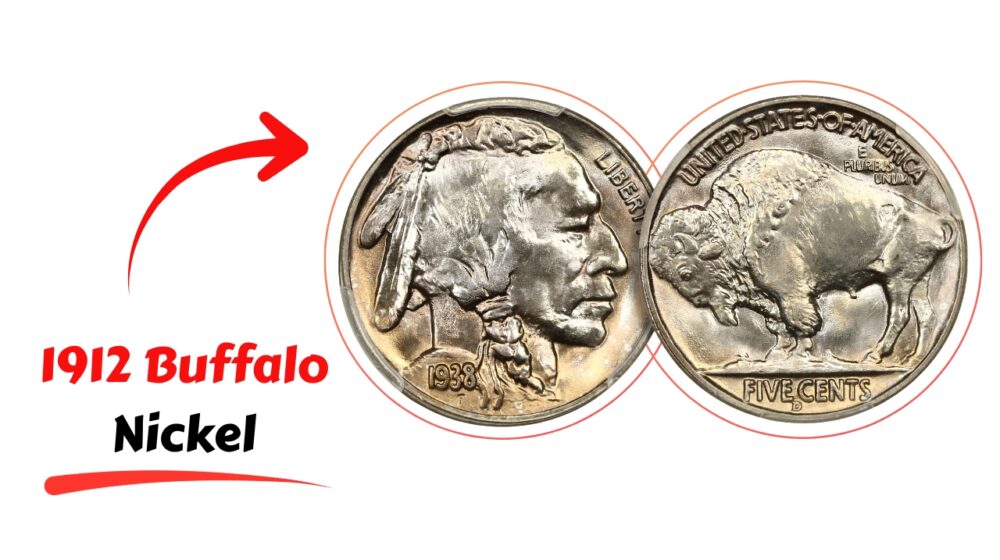
Production began at the Philadelphia Mint on February 17, 1913. The finished coin used a standard 75% copper, 25% nickel alloy, weighed 5.0 grams, measured approximately 21.2 mm in diameter, and carried a plain edge. Early in that first year, the Mint also revised the reverse: the original Type I design showed the bison standing on a raised mound with FIVE CENTS displayed prominently below, but officials quickly recognized the design would wear too fast, prompting the Type II revision that lowered and protected the denomination within a recessed area. The Buffalo nickel remained in production through 1938.
The Fraser Estate Connection
What separates this particular pair from generic pattern material is direct, documented lineage to Fraser himself. The two electrotrials came from the estate of James Earle Fraser and his wife, the accomplished sculptor Laura Gardin Fraser, before entering the market through Bowers and Ruddy Galleries’ July 1981 sale of the William R. Sieck Collection, where they appeared separately as Lots 2421 and 2422. They resurfaced together at a Stack’s auction in October 1988 as Lots 2610 and 2611, and PCGS now houses both pieces together in a single double-size holder, certified MS-64 a physical pairing that echoes their shared origin as two halves of the same design presentation.
Design Description
The 1912 Obverse Electrotrial (Judd-1912-1)
The obverse piece weighs 4.0 grams (61.74 grains) and carries Fraser’s Native American portrait a design already strikingly close to the image that would reach American coinage in 1913. Several details, however, mark it clearly as an early-stage experimental piece rather than a finished production model: the date uses smaller numerals than the design eventually adopted, and Fraser’s familiar designer’s initial does not appear on this early version at all. Because Medallic Art based the electrotype on Fraser’s sketch models rather than finished coinage-ready models, the design shows softer modeling throughout, lacking the crisp detail of a struck Mint product a characteristic that, rather than detracting from the piece, gives collectors a genuine window into the design’s evolution.
The 1912 Reverse Electrotrial (Judd-1912-2)
The companion reverse piece weighs 4.096 grams (63.21 grains) and, at first glance, closely resembles the Type I Buffalo nickel reverse that entered production in 1913. Closer inspection reveals meaningful differences: FIVE CENTS appears in smaller letters than the adopted design, Fraser used hyphens rather than periods to separate the words in UNITED STATES OF AMERICA, and E PLURIBUS UNUM appears in unusually tiny lettering. The bison itself also differs in several minor respects from the animal ultimately used on regular-issue Buffalo nickels. Rather than simply showing where Fraser’s design ended up, this piece documents where it had been along the way.
Surface Treatment
Both pieces display a deep pewter-gray appearance, the result of plating or coloring applied by Fraser or Medallic Art Company specifically to suggest the look of actual nickel five-cent coinage. That treatment wasn’t incidental these objects needed to look convincing enough in the hands of Treasury officials to help sell an unfamiliar, unprecedented design concept.
Why This Matters for Collectors
Physical evidence of a design still in motion. Most collectors interact only with the finished Buffalo nickel. These electrotrials capture the design mid-development different lettering, different numeral sizes, a bison rendered slightly differently, Fraser’s designer initial not yet added offering a genuinely rare look at decisions that were still being made.
They did real historical work. These weren’t decorative curiosities; Burdette’s research indicates they functioned as Fraser’s tool for keeping Secretary MacVeagh engaged and persuaded while the sculptor refined his final models, effectively helping make the Buffalo nickel’s approval possible in the first place.
Documented, direct-from-the-artist provenance. A clean chain of ownership running from the Fraser estate itself through two well-documented 20th-century auction appearances gives this pair a level of authentication and historical confidence that generic pattern material typically can’t match.
A market that continues to reward this category. The $122,000 result for this pair, alongside the $180,000 realized for a related Fraser Buffalo nickel galvano in 2024, shows sustained, serious collector demand for genuine pre-production Buffalo nickel design material specifically tied to Fraser’s own hand.
A window into the broader Buffalo nickel design fight. Beyond the electrotrials themselves, their story connects directly to the larger history of how the design nearly stalled over Hobbs Manufacturing’s objections context that deepens appreciation for a coin most collectors otherwise think of as simply always having existed in its familiar final form.
Quick-Reference Buying Guide
- Understand that unique pattern material trades differently than regular-issue coins. There’s no mintage, no product limit, and no order window availability depends entirely on what surfaces from estates, old collections, or specialist consignments.
- Watch major Rarities Night-caliber auctions. Stack’s Bowers Galleries and Heritage Auctions are the most likely venues for Buffalo nickel pattern and pre-production material to appear.
- Prioritize documented provenance. For pattern and pre-production pieces especially, a verifiable chain of ownership ideally tracing to the designer or an important early collection meaningfully strengthens both authenticity confidence and resale value.
- Confirm third-party certification. PCGS or NGC grading adds a critical layer of authentication for one-of-a-kind objects that have no broader population to compare against.
- Research comparable prior sales before bidding. Recent results, like this pair’s $122,000 and the related $180,000 galvano sale, offer the most relevant reference points, since this category has few enough sales that older or unrelated benchmarks may not apply.
- Consult directly with auction house pattern specialists. Given how specialized and individually researched this material is, a direct conversation before bidding is standard practice rather than an extra step.
- Register with the auction house in advance and confirm buyer’s premiums, payment terms, and secure shipping arrangements before bidding on high-value lots.
- Set realistic expectations on budget. Documented, artist-provenanced Buffalo nickel design material has recently traded well into six figures; collectors should budget accordingly for genuinely significant pieces in this category.
This article covers a unique numismatic item sold at a documented public auction. The specific pair described here has already sold; figures and details reflect the September 1, 2026 Stack’s Bowers Galleries result and related market context, and are provided for historical and educational reference.