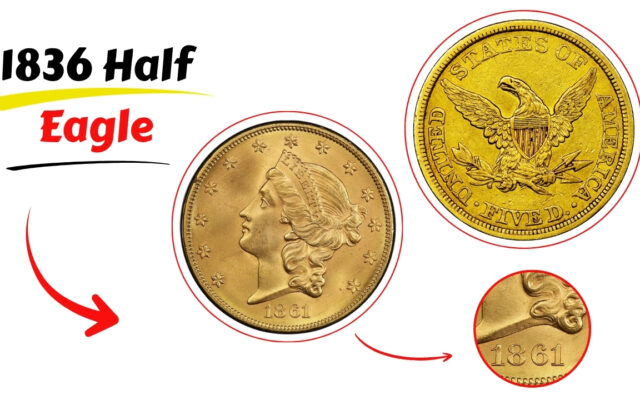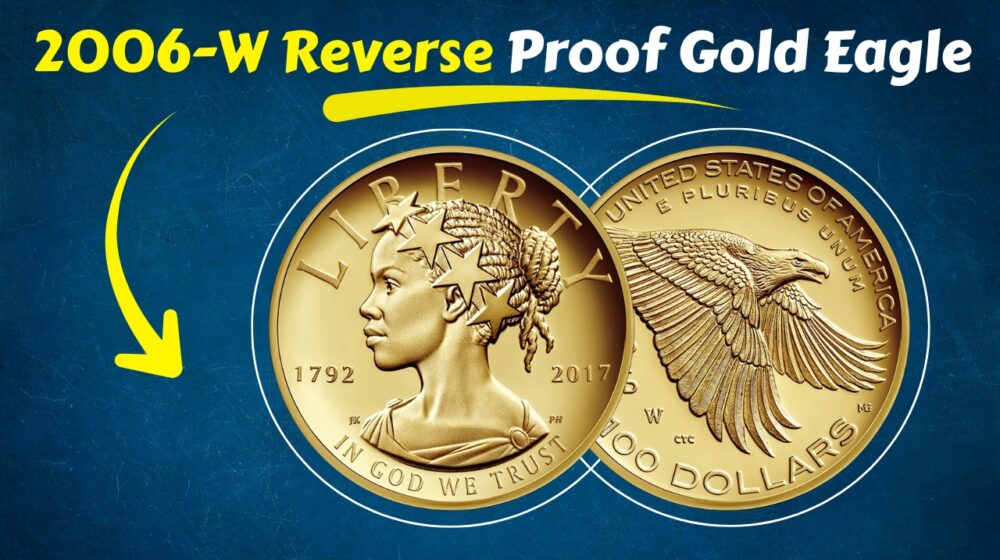
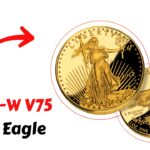
At first glance, the 2006-W $50 One-Ounce American Gold Eagle Reverse Proof looks like a familiar design turned inside out. Augustus Saint-Gaudens’ striding Liberty, one of the most celebrated images in American coinage, now gleams with mirror-bright brilliance against frosted fields the exact opposite of a traditional Proof coin’s appearance. The same treatment transforms Miley Busiek Frost’s Family of Eagles design on the reverse.
The United States Mint created this coin to mark the 20th anniversary of the American Eagle bullion program, and in doing so produced the first Reverse Proof finish ever applied to a U.S. gold coin. But the finish is only part of the story. The Mint refused to sell the coin on its own, bundling it instead into a $2,610 three-coin anniversary set. When production wrapped up, only 9,996 examples existed a figure that, at the time, made this the lowest-mintage one-ounce Gold Eagle in the series’ history. Two decades later, that unusual combination of artistic innovation, restrictive sales strategy, and tight mintage has made the 2006-W Reverse Proof one of the most quietly significant modern gold coins the Mint has ever issued.
Specifications at a Glance
| Attribute | Detail |
|---|---|
| Country | United States |
| Year | 2006 |
| Denomination | $50 |
| Mint Facility | West Point |
| Mintmark | W |
| Finish | Reverse Proof |
| Composition | 91.67% gold, 3% silver, 5.33% copper |
| Gold Content | 1.000 troy ounce (pure gold) |
| Gross Weight | 33.931 grams |
| Diameter | 32.70 mm |
| Edge | Reeded |
| Obverse Artist | Augustus Saint-Gaudens |
| Reverse Artist | Miley Busiek Frost |
| Reverse Sculptor | Sherl J. Winter |
| Recorded Mintage | 9,996 |
| PCGS Number | 89994 |
| Set Price at Issue | $2,610 (three-coin anniversary set) |
| Set Sales Window | Began August 30, 2006, at 12:00 p.m. ET |
| Maximum Sets Authorized | 10,000 |
| Per-Order Household Limit | 10 sets |
How Collectors Actually Bought This Coin in 2006
Unlike most Gold Eagles, which could be purchased individually as bullion, Proof, or (starting that same year) Uncirculated coins, the Reverse Proof was never offered as a standalone product. The only way to obtain one was to buy the full anniversary package.
- Announcement: The U.S. Mint unveiled three special American Eagle anniversary products on August 21, 2006, giving collectors roughly a week’s notice before sales opened.
- Sales launch: Ordering began on August 30, 2006, at noon Eastern Time.
- What came in the set: For $2,610, buyers received three separate one-ounce $50 Gold Eagles, all struck at West Point and all carrying the “W” mintmark a traditional Proof coin, the new Reverse Proof, and a collector Uncirculated coin (itself a new format introduced that year, made from burnished planchets rather than standard bullion blanks).
- Program cap: The Mint capped the offering at a maximum of 10,000 three-coin sets.
- Order limit: Individual orders were restricted to a maximum of 10 sets per buyer.
- Final mintage: Despite the 10,000-set ceiling, only 9,996 Reverse Proof coins were ultimately produced and recorded a shortfall of four units that remains unexplained in the Mint’s surviving public materials from 2006. Some accounts attribute this to returns or production adjustments, but no official documentation confirms a specific cause.
- Price context: On the day sales opened, gold for current delivery traded at approximately $617.70 per troy ounce, meaning the three one-ounce coins in the set contained roughly $1,853 in bullion value at spot price collectors paid a substantial premium above metal value for the anniversary packaging, the limited availability, and the new finishes.
Because the set has been sold out and off the market for years, today’s “buying process” for collectors is entirely secondary-market: sourcing individual coins or complete sets through major auction houses (Heritage, Stack’s Bowers, GreatCollections) or reputable dealers, rather than ordering directly from the Mint.
Historical Background
The Obverse Design: Saint-Gaudens’ Striding Liberty
The artistic lineage of this coin stretches back more than a century before it was struck. In December 1904, President Theodore Roosevelt wrote to Treasury Secretary Leslie Mortier Shaw, sharply criticizing the artistic quality of American coinage and pushing for a redesign worthy of the nation’s growing global stature. Roosevelt enlisted sculptor Augustus Saint-Gaudens, widely regarded as one of America’s greatest artists of the era, to create new designs for the nation’s gold coinage.
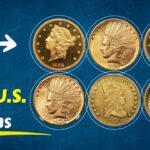
Saint-Gaudens redesigned both the $10 Eagle and the $20 Double Eagle. His striding Liberty figure torch raised in one hand, olive branch in the other, the Capitol building and rays of a rising sun behind her first appeared on the Double Eagle in 1907 and became one of the most admired coin designs in American history.
Nearly 80 years later, Congress revived that image for a new purpose. The Gold Bullion Coin Act of 1985, signed into law on December 17, 1985, authorized the creation of a new American gold bullion program. When the U.S. Mint launched the American Eagle Gold series in 1986, it placed Saint-Gaudens’ Liberty on the obverse, giving the Progressive Era design a permanent home on modern American gold.
The Reverse Design: Miley Busiek Frost’s Family of Eagles
For the reverse of the new bullion coin, the Mint turned to sculptor Miley Busiek Frost, who created an image intended to reflect distinctly modern American values. Her design shows a male bald eagle carrying an olive branch toward a nest, where a female eagle waits with hatchlings. Sculptor Sherl J. Winter translated Frost’s artwork into the finished coinage design. The Mint described the scene as a symbol of family and unity themes that paired naturally with Liberty’s more classical, aspirational imagery on the obverse.
This pairing Saint-Gaudens’ Liberty opposite Frost’s Family of Eagles appeared on every American Gold Eagle from the program’s 1986 debut through 2021, when the Mint retired the original reverse in favor of a new close-up eagle portrait by Jennie Norris. That makes the 2006-W Reverse Proof part of a now-completed 35-year chapter in the series’ visual history.
The Coin’s Own Innovation: A Reversed Proof Format
Traditional Proof coins rely on contrast: mirror-like fields surround frosted, matte devices. For the American Eagle program’s 20th anniversary in 2006, the Mint flipped that formula entirely. The result frosted fields paired with brilliant, mirrored raised design elements created a visual effect strong enough to stand out even on a large one-ounce gold coin. PCGS recognizes the 2006-W $50 as the first United States gold coin ever struck with a Reverse Proof finish. The Mint paired this gold release with a Reverse Proof Silver Eagle as part of the same anniversary celebration.
Obverse and Reverse: A Closer Look
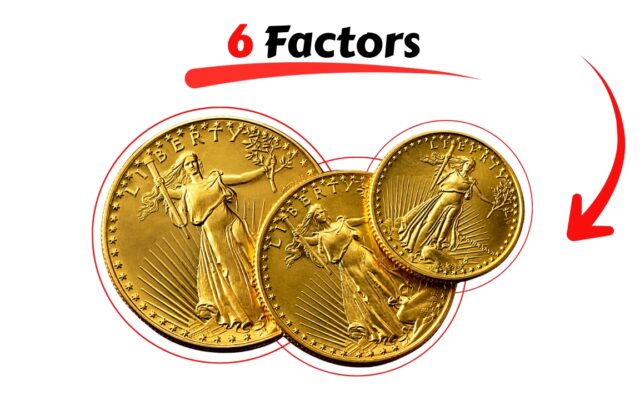
Obverse: Saint-Gaudens’ Liberty strides forward with the U.S. Capitol building visible in the background and sunrays fanning out along the lower field. She holds a torch aloft in her right hand, symbolizing enlightenment, while her left hand carries an olive branch, a gesture toward peace. On the Reverse Proof finish, Liberty’s figure and the surrounding inscriptions carry a deep, reflective shine, while the field around her takes on a soft, frosted texture a full inversion of how the same design appears on a standard Proof Gold Eagle.
Reverse: Miley Busiek Frost’s composition centers on a male bald eagle in flight, an olive branch clutched in its talons, descending toward a nest that holds a female eagle and her young. The scene is rendered with careful attention to feather detail and a sense of protective motion. On the Reverse Proof coin, the eagles and lettering catch the light with mirrored brilliance, while the background field recedes into a matte, frosted finish creating strong visual separation between the birds and their surroundings.
Why This Matters for Collectors
Many modern U.S. coins lean on a single selling point a low mintage, a celebrity signature label, or a short sales window to generate long-term collector interest. The 2006-W Reverse Proof Gold Eagle stacks several of these factors together, which helps explain its lasting relevance:
- A genuine numismatic first. It remains the first Reverse Proof finish ever applied to American gold coinage, a technical and aesthetic milestone independent of its mintage or price.
- A confirmed low mintage. At 9,996 pieces, it held the distinction of the lowest mintage one-ounce Gold Eagle issue at the time of release, even though later issues have since fallen below that number.
- Restricted access by design. The Mint’s decision to bundle the coin exclusively into a $2,610 three-coin set rather than offering it individually meant that every collector who wanted one had to buy into the full anniversary program, capping true individual demand in a way that shaped the coin’s long-term scarcity.
- A closed chapter in the series’ design history. With the original Saint-Gaudens/Frost pairing retired after 2021, the 2006-W Reverse Proof now represents a finished era of the American Eagle program, combining two historically significant designs in a format that was never repeated in gold at this scale.
- A market history worth double-checking. Collectors should be cautious about a frequently cited $9,200 auction record attributed to a 2011 Heritage sale. That figure actually reflects the combined sale price of a complete three-coin anniversary set not a standalone Reverse Proof. Verified individual sales include a PCGS PR70 Deep Cameo coin that brought $5,750 at Heritage in March 2007, a PCGS Proof-70 First Strike example with an Edmund C. Moy signed label that sold for $5,344.88 at GreatCollections in March 2025, and an NGC Proof-70 coin with a John M. Mercanti signature label that realized $3,120 at Stack’s Bowers in November 2023.
- Condition matters, but context matters more. A Proof-70 grade appeals strongly to registry-set collectors, and the coin’s expansive frosted fields can make even minor haze or contact marks more visible than on a traditional Proof surface. Still, the coin’s fundamental rarity comes from its capped, bundled-only sales structure and confirmed mintage not from grade alone.
Quick-Reference Buying Guide
- Understand this is a secondary-market purchase today. The original 2006 sales window is long closed, so any acquisition now comes through dealers or auction houses rather than a direct Mint order.
- Decide whether you want the coin alone or the full set. The Reverse Proof can be found individually on the secondary market, but the complete three-coin 20th Anniversary set (Proof, Reverse Proof, and Uncirculated) is also actively traded and may appeal to collectors wanting the full anniversary story.
- Verify third-party certification. Look for PCGS or NGC certification (PCGS Number 89994 for the Reverse Proof) and confirm the grade, since Proof-70 examples in particular command a premium.
- Check for special labels carefully. Signature labels (such as Edmund C. Moy or John M. Mercanti) or “First Strike” designations can add value, but confirm authenticity and understand these are separate from the coin’s base rarity.
- Don’t rely on the widely cited $9,200 “record” alone. Cross-check whether a quoted auction result refers to a standalone Reverse Proof or a bundled three-coin set before using it to judge fair market value.
- Compare recent verified sales. Reference documented standalone results such as $5,750 (Heritage, 2007), $5,344.88 (GreatCollections, 2025), and $3,120 (Stack’s Bowers, 2023) as more reliable benchmarks than headline auction figures.
- Factor in current gold spot price. Since the coin carries a full troy ounce of gold, its floor value moves with the bullion market; compare any asking price against the coin’s melt value plus its collectible premium.
- Buy from reputable auction houses or established dealers. Given the coin’s certification-dependent value and documented pricing quirks, purchasing through recognized platforms like Heritage, Stack’s Bowers, or GreatCollections helps ensure accurate grading and provenance.