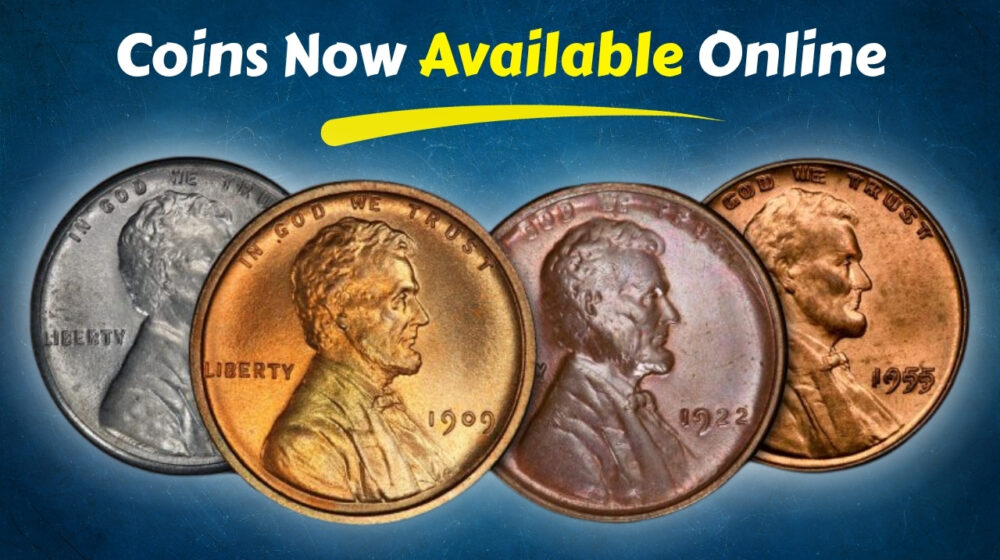
For years, one of the most sought-after references in the error-coin niche of numismatics has been genuinely hard to find. Mike Byers’ World’s Greatest Mint Errors built its reputation on jaw-dropping photography and detailed explanations of how the U.S. Mint’s most spectacular production failures came to exist, but physical copies grew scarce, and the book became something collectors traded stories about more often than they actually owned.
That’s changed. Byers has made the complete book available to read online at no cost, opening up a resource that once circulated mainly among advanced collectors and specialist dealers to anyone with an internet connection. For a hobby built on the thrill of finding something the Mint never meant to make, that’s a meaningful shift: the coins that once required an expensive book, a show floor connection, or years of accumulated knowledge to even learn about are now a click away.
This is not a coin release or a new product from the Mint. It’s the re-opening of a landmark reference work, and it deserves the same close look collectors would give any major numismatic milestone.
Quick-Reference Book Details
Because this is a publication rather than a coin, the details worth tracking look a little different than a typical coin’s specifications. Here’s the reference snapshot:
| Attribute | Detail |
|---|---|
| Title | World’s Greatest Mint Errors |
| Author | Mike Byers |
| Subject | U.S. and world mint errors, experimental pieces, and die trials |
| Format (original) | Full-color print reference book |
| Format (current) | Free online edition hosted on Mike Byers’ website |
| Cost to access online | Free |
| Print copy availability | Scarce; increasingly difficult to find |
| Recognition | 2009 Numismatic Literary Guild (NLG) Award, Best World Coin Book |
| Award presented | NLG Bash, in conjunction with the ANA World’s Fair of Money, Los Angeles, August 5–9, 2009 |
| Content scope | Hundreds of error coins and die trials, with grading, rarity, and value estimates |
| Special content | Coverage of newly discovered coins and error types, including pieces with little or no prior public exposure |
| Pricing data | Compiled with input from leading mint error dealers; figures reflect market conditions at time of publication |
There’s no mintage figure, composition, weight, or diameter to report here since the subject is a book about many different coins rather than a single issue. Readers looking for specifications on any individual error coin featured in the book should consult that coin’s own listing or certification record, as values and technical details vary enormously from piece to piece.
How to Access the Book
Unlike a Mint product, there’s no order window, no purchase limit, and no cost involved in accessing World’s Greatest Mint Errors today. The practical steps for a collector are straightforward:
- Visit Mike Byers’ website, where the complete book has been posted for free public viewing.
- Browse by chapter or error type, since the original book was organized around categories of mint mistakes, from off-metal strikes to dramatic misalignments and die trials.
- View the full-color photography, which was a hallmark of the original print edition and remains part of the online presentation.
- Cross-reference pricing information with current market data, since the book’s value charts were compiled by mint error dealers at the time of publication and should be treated as historical reference points rather than up-to-date price guides.
Because the online edition is freely hosted rather than sold, there is no purchase process to walk through. Collectors interested in owning an original print copy, however, will need to search the secondary market through dealers, auction houses, or numismatic literature specialists, since new print copies are no longer readily available.
Historical Background: The Book and Its Author
Mike Byers and the Mint Error Specialty
Mike Byers built his reputation as one of the numismatic community’s leading authorities on mint errors, a specialty that requires a different skill set than collecting by date or mintmark. Identifying and valuing genuine errors demands an understanding of how coins are actually produced, from planchet preparation through striking, so that a real production mistake can be distinguished from ordinary post-Mint damage.
Byers compiled World’s Greatest Mint Errors to bring that expertise to a wider audience. Rather than producing a narrow technical catalog, he combined serious numismatic documentation with large-format, full-color photography designed to make each error’s dramatic character immediately apparent, even to readers unfamiliar with error terminology.
Publication and Recognition
The book earned the Numismatic Literary Guild’s award for Best World Coin Book in 2009. The NLG, founded in 1968, exists specifically to recognize excellence in numismatic writing, publishing, and broadcasting, with entries judged each year by experienced writers, editors, and specialists in the field. The award was presented at that year’s NLG Bash, held alongside the American Numismatic Association’s World’s Fair of Money in Los Angeles.
That recognition placed Byers’ book among the most respected numismatic publications of its era, and it has remained a reference point for error-coin collectors in the years since, even as print copies became harder to find.
What the Book Documents
Rather than centering on a single coin design, World’s Greatest Mint Errors is organized around categories of production mistakes drawn from U.S. and world coinage. These include coins struck multiple times, pieces missing key design elements, coins struck on the wrong planchet entirely, and dramatic striking misalignments, among other error types. Many of the featured examples had little or no previous public exposure, having remained in advanced private collections or specialized dealer inventories before appearing in the book.
What the Photography Shows: Errors in Detail
Because the book’s subject is a wide range of error types rather than a single coin’s obverse and reverse, its visual focus works differently than a typical coin profile. Instead of describing one design, the book uses enlarged, full-color images to let readers examine the specific physical evidence that makes a coin a genuine mint error, details that are often too small or subtle to appreciate in a standard coin photograph.
Depending on the error type, that evidence might include:
- Doubled or multiple strikes, where design elements appear duplicated or overlapping due to the coin being struck more than once.
- Missing design elements, such as a coin lacking a mintmark, a date, or another feature that should have been present.
- Off-metal or wrong-planchet strikes, where a design intended for one denomination or composition appears on a blank meant for another.
- Misalignment errors, where the obverse and reverse dies were not properly centered relative to each other, or where a coin was struck off-center on its planchet.
- Die trial pieces, which document experimental or preparatory stages of die production rather than a finished, intended coin.
The book’s large-format photography is built specifically to make these subtle production failures visible and understandable, which is a large part of why it succeeded with both new collectors and specialists.
Why This Matters for Collectors
Access to World’s Greatest Mint Errors matters for reasons that go beyond simple nostalgia for a hard-to-find book. Error coins occupy a specialty niche within numismatics that depends heavily on education: without understanding how a genuine error forms during planchet preparation, die production, or striking, it’s easy to mistake ordinary post-Mint damage for something far more significant, or to overlook a genuinely rare piece sitting in an old collection.
By making the book freely available, Byers has lowered the barrier to entry for an entire specialty. New collectors gain a visual, accessible introduction to error terminology and the minting process. Advanced specialists retain a resource for studying rare pieces, unusual error combinations, and coins that rarely surface publicly. And because the book was built around dramatic photography as much as technical explanation, it also functions as an entry point for people who have never studied minting technology at all, giving the broader hobby a chance to pull in new interest.
The free online release also preserves historical pricing data compiled by leading mint error dealers at the time of publication. While those figures shouldn’t be treated as current market values, they offer collectors a documented reference point for how the error-coin market has moved over time.
Quick-Reference Guide to Using the Book
- Go to Mike Byers’ website to access the complete online edition at no cost.
- Start with the introductory material if you’re new to error coins, since the book is designed to explain error terminology and basic minting processes before moving into advanced content.
- Browse by error category rather than trying to read cover to cover, since chapters are organized around specific types of mint mistakes.
- Study the enlarged photography closely, paying attention to the specific details described in the text that distinguish a genuine error from post-Mint damage.
- Treat listed values as historical reference points, not current pricing, and cross-check any coin you’re considering buying against present-day market data or a certification service.
- Use the book to help authenticate finds, comparing suspected error coins from your own collection or circulation searches against documented examples.
- Consider print copies only through the secondary market if you want a physical edition, since new copies are no longer readily available.
- Return to the resource as needed, since its free, permanent online availability makes it a lasting reference rather than a one-time read.